VS PERSEVERANCE SPEED
10×
DESERT TRAVERSE
16 mi
DRIVE TIME
37 hrs
DEV START
2022
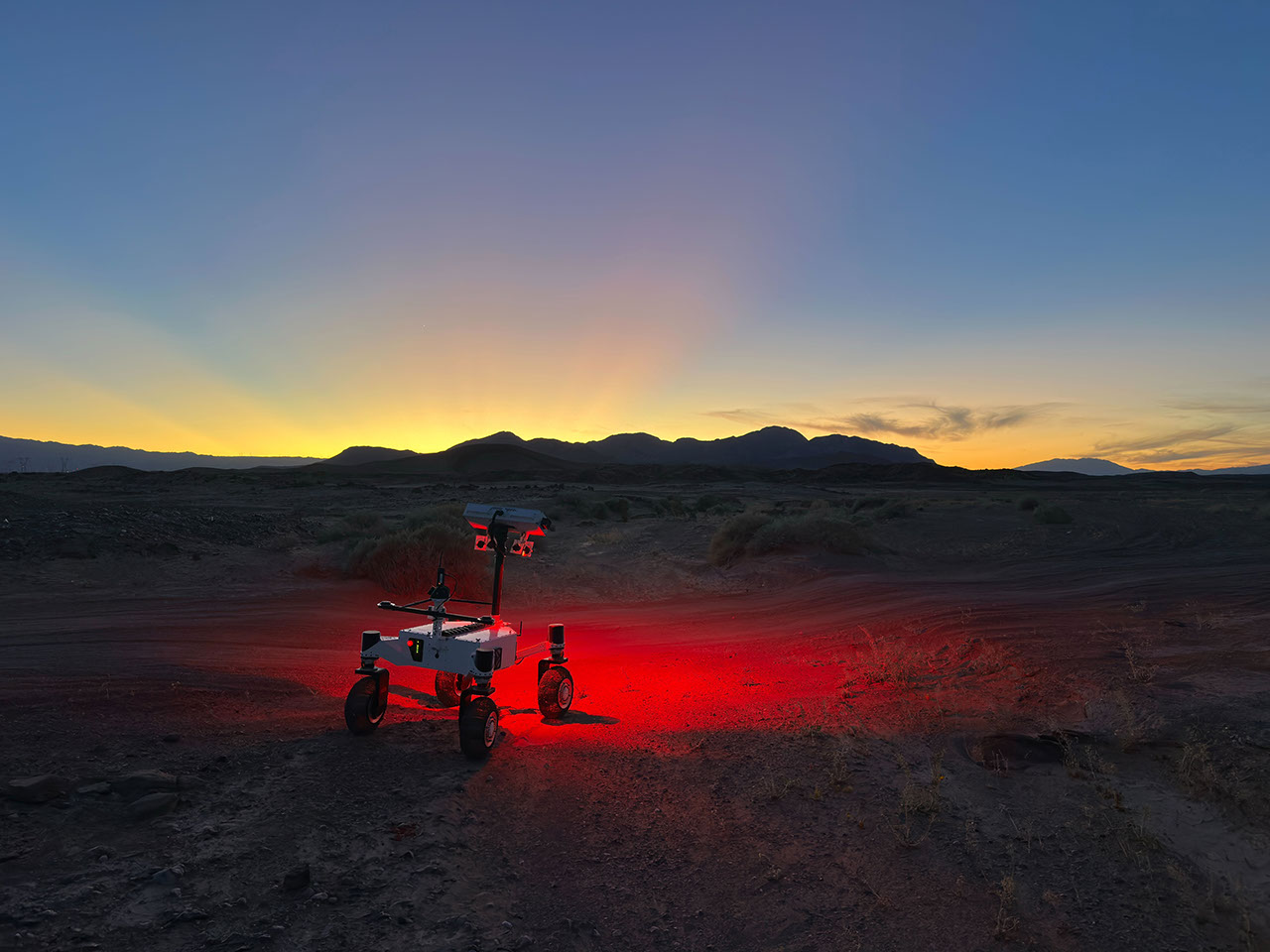
NASA's Jet Propulsion Laboratory has field-tested a prototype rover called ERNEST (Exploration Rover for Navigating Extreme Sloped Terrain) in the Colorado Desert near Plaster City, California, in March 2026. The four-wheel vehicle is not destined for space itself — it is a testbed for autonomy software that JPL hopes will power a future lunar rover capable of speeds and distances that current planetary rovers cannot match.
Extraction Map
The numbers matter. ERNEST covered about 16 miles over 37 hours of drive time, achieving more than 10 times the navigation speed of NASA's Perseverance rover on Mars. Perseverance's autonomous driving tops out at roughly 120 meters per hour. ERNEST's pace — around 0.43 miles per hour sustained — is modest by terrestrial standards but transformative for planetary exploration, where every meter of autonomous travel reduces mission risk and expands science return. The test specifically targeted low-light conditions — dusk, dawn, and nighttime driving — to simulate the extreme terrain shadows found in lunar polar regions. This is where the real engineering challenge lives. The Moon's south pole, the target zone for Artemis-era surface operations, features permanently shadowed craters adjacent to sunlit ridges, creating lighting conditions that defeat conventional stereo vision navigation. If your autonomy stack can't handle shadow boundaries, your rover is blind in the places you most need it to go. ERNEST's development timeline reveals how JPL's internal R&D pipeline works. Work began in 2022, initially funded by JPL's own internal research and development budget — the kind of seed money that lets engineers prototype without waiting for a formal mission to materialize. The project has since graduated to funding from NASA's Mars Exploration Program and the Exploration Science Strategy Integration Office under NASA's Science Mission Directorate. That dual funding stream — Mars program plus lunar exploration office — signals that the autonomy software being developed is intended to be mission-agnostic, applicable to both Mars and Moon surface operations. The institutional structure here is worth noting. Caltech manages JPL for NASA, creating a university-lab-agency chain that has historically been one of the most productive technology pipelines in the federal government. ERNEST sits in the tradition of JPL testbeds that preceded actual flight hardware — the kind of unglamorous desert testing that eventually produces systems like Perseverance's AutoNav. The gap between testbed and flight is typically 5-10 years. What this is not: a mission announcement, a flight-ready vehicle, or a commitment to build a specific lunar rover. What it is: a capability demonstration that the autonomy software exists and works at speeds relevant to lunar polar exploration. The hardware is a means to an end — the software is the product. Engineers trailed ERNEST through the desert watching it make decisions, and that decision-making architecture is what will eventually ride on whatever chassis NASA selects for a polar lunar mission.
Worth reading?
ESSENTIAL
Score
84
/100
Generative. Public R&D dollars building reusable autonomy capability that expands what planetary missions can do, with no extraction mechanism — the software is mission-agnostic infrastructure.
What Is GRIN?
GRIN stands for Generativity, Resilience, Innovation efficiency, and Novelty openness. These four dimensions capture the essential characteristics of any memetic intelligence — whether a nation, a corporation, a religion, or a movement.
About GRINGenerativity
4/5
Resilience
4/5
Efficiency
4/5
Novelty
4/5
Extractive
0/5
Inverted
Does this create new capability or just redistribute existing value?
Strongly generative. Autonomy software tested here is mission-agnostic — applicable to both Mars and lunar rovers. A 10× speed gain over Perseverance expands the frontier of what surface missions can accomplish.
Verified Facts (9)
Called ERNEST (Exploration Rover for Navigating Extreme Sloped Terrain)
Prototype four-wheel rover developed at NASA's Jet Propulsion Laboratory
Traveled about 16 miles over the course of 37 hours of drive time
More than 10 times the speed at which NASA's Perseverance rover can navigate on Mars
Field test in the Colorado Desert near Plaster City, California, in March 2026
Tested at dusk, dawn, and nighttime to simulate large terrain shadows in polar regions on the Moon
Work on ERNEST began in 2022, initially supported by JPL internal research and development funds
Currently funded by NASA's Mars Exploration Program and the Exploration Science Strategy Integration Office
Caltech in Pasadena, California, manages JPL for NASA
More latest news
Read all