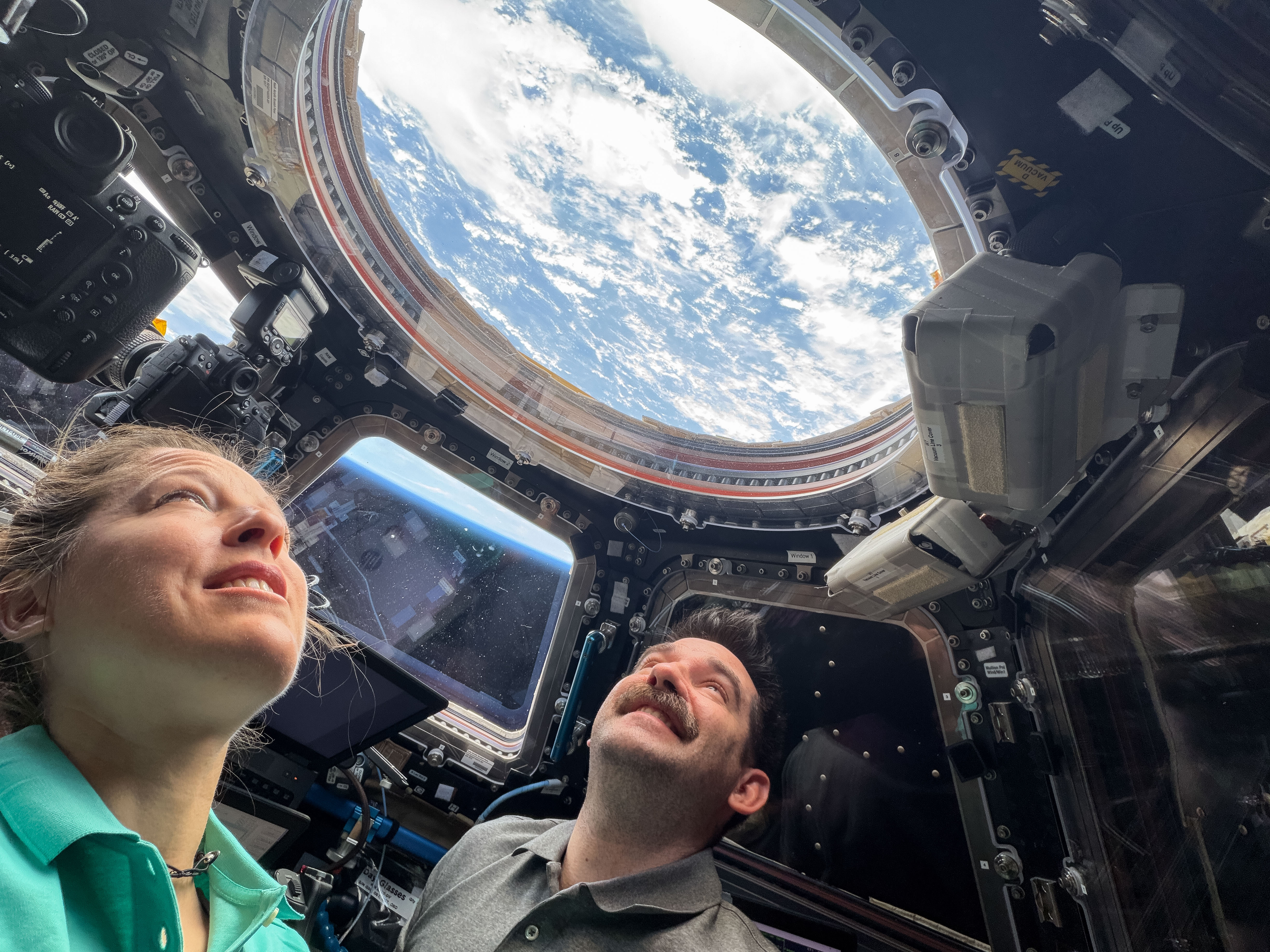
There is a photograph from the International Space Station that contains no data, no policy, no controversy. Sophie Adenot of ESA and Jack Hathaway of NASA, both Expedition 74 flight engineers, are looking out the cupola window. That's the entire content. Two people, one window, the planet below. The cupola is the ISS's most human module — a seven-windowed observation dome designed not for science but for seeing. It exists because engineers understood that astronauts need to look at Earth the way sailors need to see the horizon. The image belongs to a tradition of space photography that has always been more about the viewer than the viewed. Adenot is ESA's first French female astronaut to fly a long-duration mission. Hathaway is a Navy test pilot. Their backgrounds could not be more different, but the cupola flattens all of that. The window is the great equalizer. Everyone who stands in it does the same thing: they look down, and something shifts. This is the Overview Effect in its most unadorned form — no philosophical treatise, no TED talk, just two flight engineers pulled to a window by the same gravity that holds the atmosphere to the planet they're watching. Frank White coined the term in 1987, but the experience predates the language. Every astronaut reports it. None can fully describe it. The photograph works because it refuses to explain itself. NASA titled it "Look Up!" — an instruction to us, not a description of them. They're looking down. We're supposed to look up. The inversion is the whole point: perspective is directional, and where you stand determines what you see. As a piece of visual communication, this image does what the best space photography has always done — it makes the station feel inhabited rather than operational. The ISS is not a laboratory in this frame. It is a place where people live and are occasionally stunned into silence by where they are.
Worth reading?
OPTIONAL
Score
52
/100
People who collect space imagery for contemplation rather than spectacle, and anyone curious about what ISS daily life actually feels like beyond the mission patches.
Cultural Placement
Like the Earthrise photo's compositional DNA crossed with Chris Hadfield's social-media intimacy, but stripped of performance. Where Earthrise was accidental and Hadfield was curated, this image sits in the quieter tradition of Shuttle-era crew candids — the kind of photo that astronaut Don Pettit or Samantha Cristoforetti would post without commentary. It owes more to Edward Hopper's window-gazers than to the heroic astronaut portrait. The mechanism is negative space: what the viewer brings to two silhouettes and a planet fills the frame more than the image itself.
Honest assessment
A well-executed entry in the cupola-gaze genre that gains modest distinction from its two-person composition and NASA's cheeky title inversion. It won't redefine space photography, but it's an honest, unperformative image that does exactly what it intends — make you pause and consider the view.
What Is NOVEL?
52
/ 100
BedrockNews applies a structured analytical framework called NOVEL to cultural works — games, books, film, music, and more.
How NOVEL worksNerve
1/5
Originality
2/5
Voice
3/5
Endurance
3/5
Lineage
4/5
What did the artist risk? What could have failed?
Minimal risk. The cupola-gaze is a proven genre — this image executes it cleanly but doesn't push against any formal boundary or audience expectation.
Lineage tree
Earthrise (1968)
direct ancestor — established the astronaut-as-witness genre
Blue Marble (1972)
tonal influence — Earth as subject, crew as frame
Pale Blue Dot (1990)
extends the form of — perspective as the message
Don Pettit's ISS photography
direct ancestor — the contemplative crew candid
Verified Facts (4)
Sophie Adenot of ESA (European Space Agency)
Jack Hathaway of NASA
Both Expedition 74 flight engineers
Look out a window in the cupola
More latest news
Read all