HONOREES
3
AMES DIVISIONS
3
BRUCE GOLD MEDAL
1
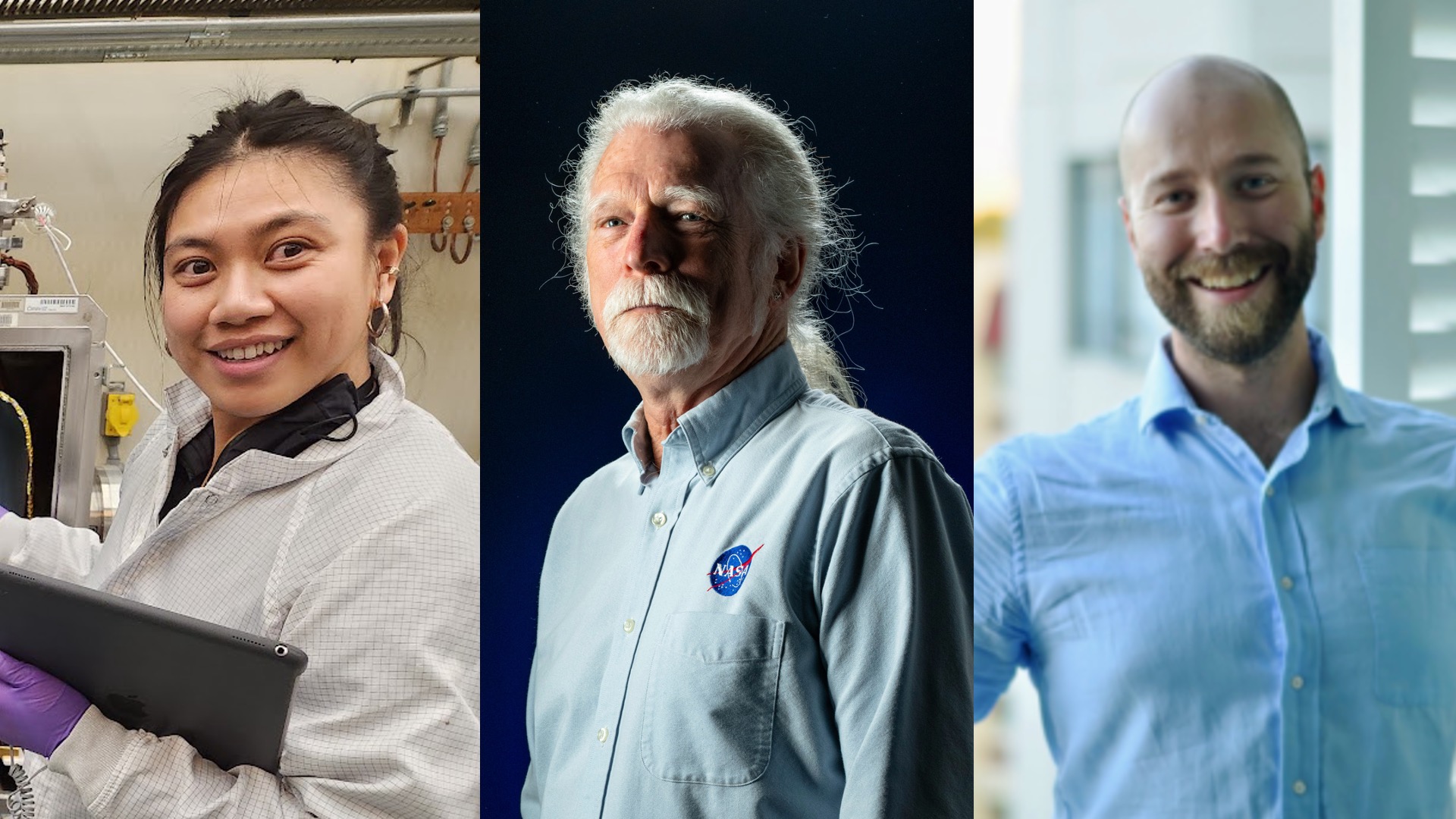
NASA Ames' Science Directorate named three staffers as its November 2026 Stars of the Month, each representing a different division and a different facet of the center's research portfolio.
Extraction Map
Alyssa Villanueva, an engineer at Blue Marble in the Space Biosciences Division, was recognized for her work on LEIA — the Lunar Explorer Instrument for space biology Applications. The citation singles out her role in preparation and execution of engineering validation testing, describing her contributions as essential to the instrument's test campaign. LEIA is designed to study biological processes in the lunar environment, making it a building block for sustained human presence beyond Earth. Steve Howell, an astrophysicist, received recognition for leading scientific teams across numerous international space missions and for pioneering work in astronomical instrumentation that has advanced both space- and ground-based telescope imaging. The Astronomical Society of the Pacific recently awarded Howell the Catherine Wolfe Bruce Gold Medal, one of astronomy's most prestigious lifetime-achievement honors. The medal places Howell in a lineage that includes Edwin Hubble and other foundational figures in observational astronomy. Samuel LeBlanc, a research scientist at the Bay Area Environmental Research Institute in the Earth Science Division, was cited for exceptional technical leadership in advancing Ames' flight-planning capabilities for NASA airborne science missions. His work has positioned Ames at the forefront of airborne science flight planning both within and outside the agency, enabling missions described as more cost-effective and scientifically productive. The three honorees illustrate the range of Ames' directorate — from lunar biology hardware to deep-space imaging to Earth-observation logistics. None of the work is consumer-facing or immediately commercializable; it sits squarely in the category of public-goods research funded by the federal science budget. There is no extraction story here. These are salaried researchers and engineers whose outputs — validated instruments, open scientific publications, mission-planning tools — feed back into the broader scientific commons. The Bruce Gold Medal for Howell is peer recognition, not a monetization event. The LEIA instrument and LeBlanc's flight-planning work are mission enablers whose value accrues to the agency and the research community, not to private shareholders. The underlying question is whether NASA's internal recognition machinery — Stars of the Month programs, directorate spotlights — translates into the sustained funding and institutional support these programs need. Public-goods science lives or dies on budget cycles, and the generative value of work like LEIA or airborne mission planning is measured in decades, not quarters.
Worth reading?
RECOMMENDED
Score
68
/100
Generative. All three honorees contribute to open scientific infrastructure — lunar biology instruments, astronomical imaging, airborne mission planning — with no extractive capture visible.
What Is GRIN?
GRIN stands for Generativity, Resilience, Innovation efficiency, and Novelty openness. These four dimensions capture the essential characteristics of any memetic intelligence — whether a nation, a corporation, a religion, or a movement.
About GRINGenerativity
4/5
Resilience
3/5
Efficiency
3/5
Novelty
2/5
Extractive
0/5
Inverted
Does this create new capability or just redistribute existing value?
Solidly generative. LEIA builds lunar biology capability, Howell's instrumentation advances open imaging, LeBlanc's planning tools reduce mission costs. All expand the research commons.
Verified Facts (4)
Alyssa Villanueva is an engineer at Blue Marble in the Space Biosciences Division on the LEIA (Lunar Explorer Instrument for space biology Applications) team.
Steve Howell received the Catherine Wolfe Bruce Gold Medal from the Astronomical Society of the Pacific.
Samuel LeBlanc is a research scientist for the Bay Area Environmental Research Institute in the Earth Science Division.
The three are NASA Ames Stars of the Month for November 2026.
More latest news
Read all