YEARS · ISS CREW
25+
GRADE RANGE
K-12
SCAN UPTIME
24/7
COST TO SCHOOLS
$0
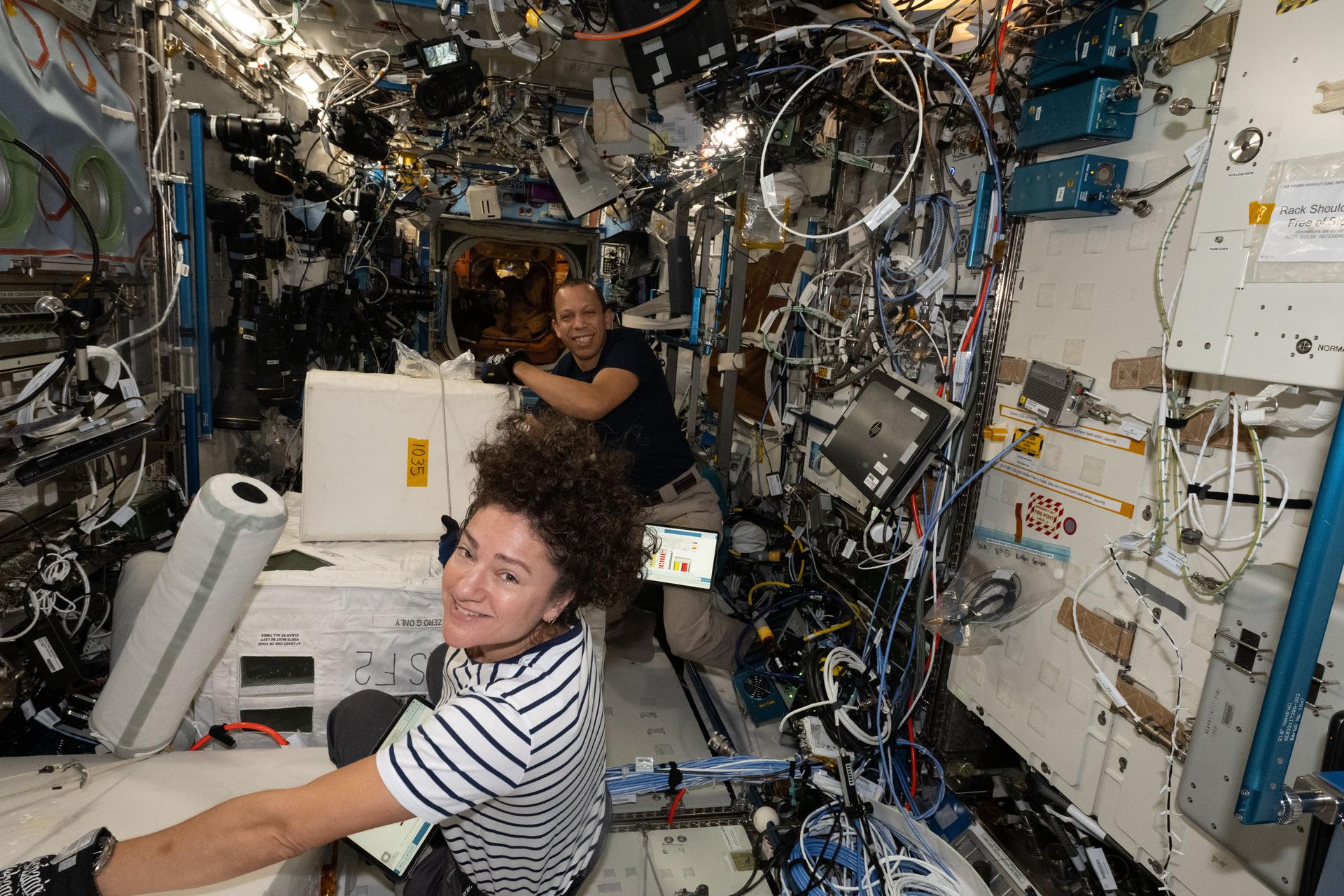
NASA astronauts Chris Williams and Jessica Meir will answer prerecorded STEM questions from students while aboard the International Space Station on June 18 at 12:05 p.m. EDT. The event, hosted by Newton Public Schools in Newton, New Jersey, targets grades K-12 and community members, streaming live on the Learn With NASA YouTube channel.
Extraction Map
The downlink program is one of NASA's longest-running public engagement formats — more than 25 years of continuous astronaut presence aboard the ISS, with regular Earth-to-space calls connecting students directly to crew. The communications infrastructure relies on SCaN's Near Space Network, a satellite relay system that keeps Mission Control in Houston connected to the station 24 hours a day. What makes these events structurally interesting is their cost profile. The ISS is already funded. The astronauts are already there. The communications backbone exists for mission operations. Bolting a 20-minute student Q&A onto that infrastructure costs NASA almost nothing at the margin while generating direct STEM exposure for hundreds of students per session, thousands per year. Newton Public Schools organized this particular session with Dr. Joseph Piccirillo coordinating media access. The school district serves a small community in Sussex County — not a major metro, not a magnet school, not a wealthy suburb. That matters. The program's open availability to formal and informal U.S.-based organizations means access isn't gatekept by institutional prestige or budget. The broader context is NASA's Artemis program, which frames ISS research as groundwork for lunar and eventually Martian exploration. The agency is explicit about the pipeline logic: inspire students now, recruit engineers later. Whether that pipeline actually converts is harder to measure, but the input cost is negligible against the ISS operational budget. Media RSVP is required by 5 p.m. EDT on June 17 — a minor friction point that limits spontaneous coverage but ensures logistical coordination. The event joins a playlist of previous downlinks and a published schedule of upcoming ones, suggesting institutional commitment to the format rather than one-off PR. This is government infrastructure doing what it should: generating public value from sunk costs with minimal extraction overhead. The program isn't flashy, but its 25-year track record and near-zero marginal cost make it one of the cleaner generative plays in federal STEM outreach.
Worth reading?
RECOMMENDED
Score
68
/100
Generative. Public infrastructure (ISS, SCaN) already funded for other purposes is repurposed for STEM education at near-zero marginal cost, with benefits flowing to students and communities rather than being captured by intermediaries.
What Is GRIN?
GRIN stands for Generativity, Resilience, Innovation efficiency, and Novelty openness. These four dimensions capture the essential characteristics of any memetic intelligence — whether a nation, a corporation, a religion, or a movement.
About GRINGenerativity
3/5
Resilience
3/5
Efficiency
4/5
Novelty
2/5
Extractive
0/5
Inverted
Does this create new capability or just redistribute existing value?
Genuine value creation from sunk costs. The ISS and SCaN exist for operations — strapping student Q&As onto that infrastructure creates new STEM exposure without new spending. Pure margin play.
Verified Facts (7)
NASA astronauts Chris Williams and Jessica Meir will answer prerecorded STEM questions aboard the International Space Station
Earth-to-space call begins at 12:05 p.m. EDT, Thursday, June 18
Stream live on the agency's Learn With NASA YouTube channel
Hosted by Newton Public Schools in Newton, New Jersey, for students in grades K-12
Media RSVP no later than 5 p.m. EDT, Wednesday, June 17, to Dr. Joseph Piccirillo at 973-383-7392, x4229
For more than 25 years, astronauts have continuously lived and worked aboard the space station
Astronauts communicate with NASA's Mission Control Center in Houston 24 hours a day through SCaN's Near Space Network
More latest news
Read all