CONSORTIUM MEMBERS
22
ATTENDEES
150
DEMO TARGETS
2028-29
STRUCTURES · WING + FUSELAGE
2
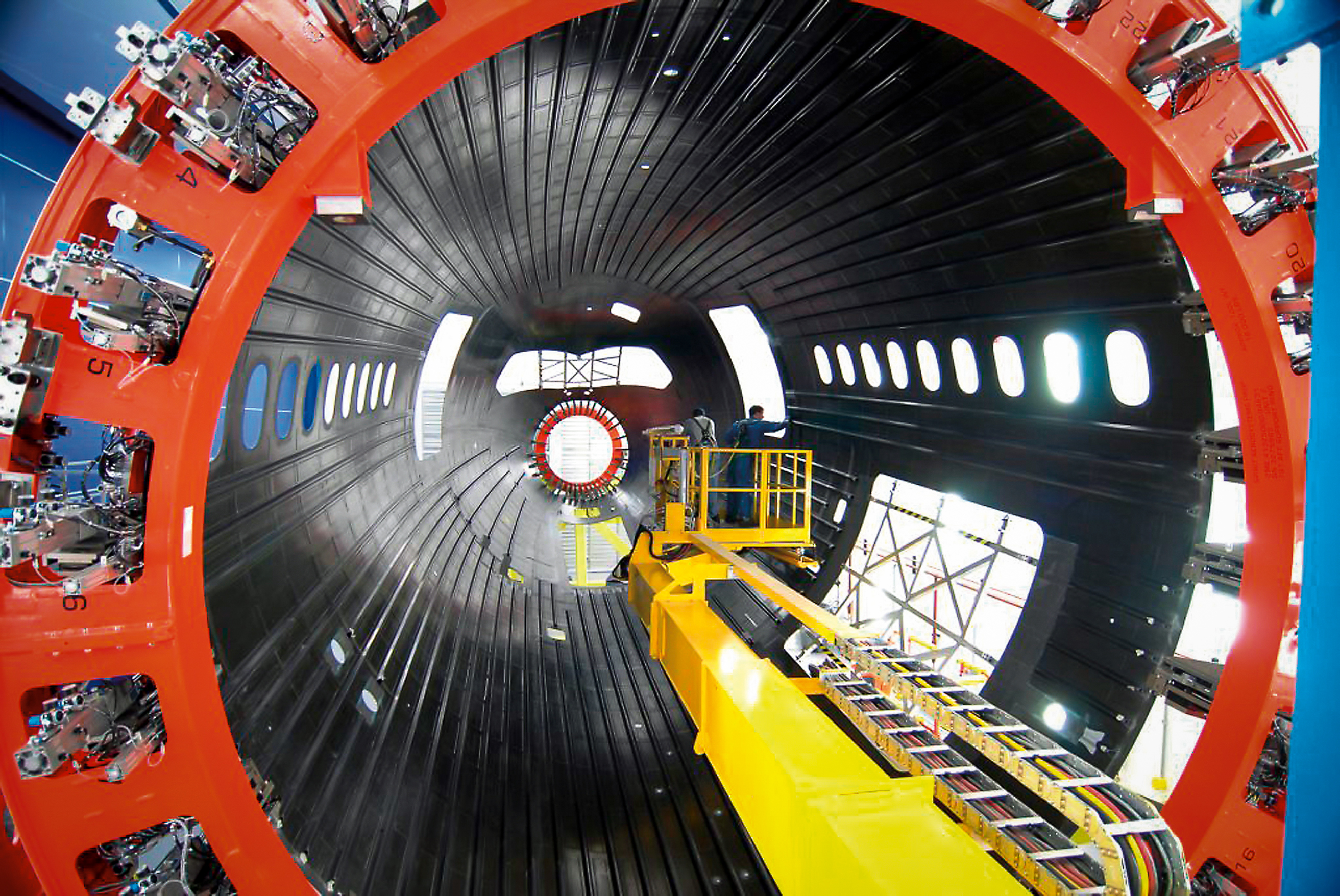
NASA's Hi-Rate Composite Aircraft Manufacturing project held its spring review at Langley Research Center May 5-7, gathering roughly 150 people from its 22-member Advanced Composites Consortium. The event marked a transition point: teams reviewed results from the Development Phase and began discussing Phase 2, the Demonstration Phase, which will scale up manufacturing technologies over the coming years.
Extraction Map
The consortium is a public-private partnership, and NASA used the review to announce portfolio decisions — selecting technologies with the greatest potential impact on manufacturing rate for the next airplane program. That language matters. "Manufacturing rate" is the bottleneck that determines whether composite-intensive aircraft remain expensive specialty products or become the industry default. Full-day workshops focused on assembly demonstrations of two critical structures: the wing and fuselage. NASA researchers, industry engineers, and consortium partners worked through updates and long-term plans. Multiple teams reported stronger collaboration and coordination compared to prior years — a soft signal, but meaningful in a consortium this large. The project's headline milestones are large-scale manufacturing demonstrations of a composite fuselage barrel and wing box in 2028 and 2029. These are not flight articles. They are manufacturing proofs — showing that advanced composite processes can support faster, cheaper aircraft production at industrial scale. The structural question underneath the progress report is who captures the value. NASA funds the pre-competitive R&D and absorbs the risk of technology maturation. Boeing and other consortium members get de-risked manufacturing processes they can deploy in their next commercial programs. The public gets — eventually — lighter, more fuel-efficient aircraft, but the timeline from demo to commercial deployment adds years. This is a well-structured generative investment by historical standards. Public money funds capability that no single company would develop alone, and the consortium model distributes knowledge across 22 partners rather than locking it inside one prime contractor. The risk is the familiar one: public investment creates private competitive advantage, and the efficiency gains flow primarily to shareholders before they reach ticket prices. The 2028-2029 demo timeline is the real test. If those demonstrations succeed, they become the manufacturing template for the next generation of commercial aircraft. If they slip or underperform, the U.S. composite manufacturing base falls further behind the rate improvements needed to compete globally.
Worth reading?
RECOMMENDED
Score
64
/100
Generative — public investment builds shared manufacturing capability across a 22-member consortium rather than concentrating it in a single firm, though value capture skews toward incumbent primes.
What Is GRIN?
GRIN stands for Generativity, Resilience, Innovation efficiency, and Novelty openness. These four dimensions capture the essential characteristics of any memetic intelligence — whether a nation, a corporation, a religion, or a movement.
About GRINGenerativity
4/5
Resilience
3/5
Efficiency
3/5
Novelty
3/5
Extractive
2/5
Inverted
Does this create new capability or just redistribute existing value?
Genuinely generative. Public R&D funding creates manufacturing capability no single firm would develop alone, distributed across 22 partners. The pie gets bigger — but incumbents eat first.
Verified Facts (6)
NASA's Hi-Rate Composite Aircraft Manufacturing (HiCAM) project brought together its full team of Advanced Composites Consortium partners for a 2026 spring review at NASA's Langley Research Center in Hampton, Virginia
The meeting took place May 5-7, bringing together about 150 people from the consortium, a 22-member public-private partnership
NASA announced recent portfolio decisions, selecting technologies that can have the greatest impact on manufacturing rate for the next airplane program
Phase 2, known as the Demonstration Phase, will scale up key manufacturing technologies in the coming years
HiCAM's goal of large-scale manufacturing demonstrations of a composite fuselage barrel and wing box in 2028 and 2029
Full-day workshops focused on assembly demonstrations of two large aircraft structures: the wing and fuselage
More latest news
Read all