DISTANCE TO L2
1M mi
HUBBLE FOV
200×
LAUNCH DATE
Aug 30
FIRST LIGHT
Dec 7
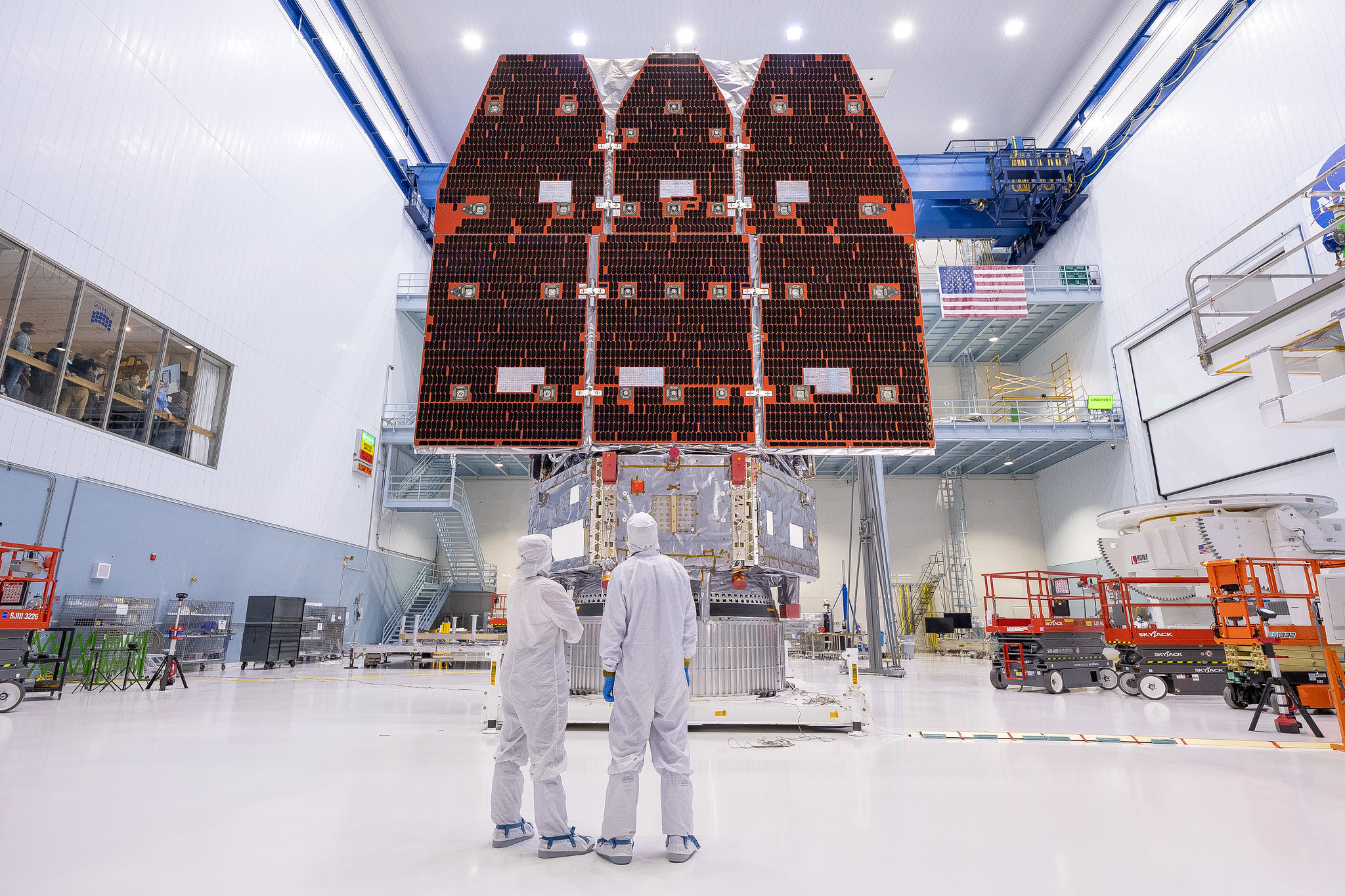
NASA's Nancy Grace Roman Space Telescope will unveil its first images during a live broadcast from the American Geophysical Union meeting in San Francisco on December 7 at 3:30 p.m. EST. The event marks the culmination of a three-month commissioning journey from Kennedy Space Center to the Sun-Earth Lagrange Point 2, roughly one million miles from Earth. The telescope launched August 30 aboard a SpaceX Falcon Heavy.
Extraction Map
Roman is not a Hubble replacement or a James Webb competitor. Its defining capability is field of view — the ability to capture panoramic infrared images of vast sky regions at high resolution. Where Webb stares deep at individual targets, Roman surveys wide. That architectural choice makes it the instrument best suited to map the large-scale structure of the universe, hunt for statistical patterns in dark energy's behavior, and conduct population-level exoplanet surveys. The commissioning process has involved turning on, adjusting, calibrating, and preparing all systems for science operations. The December 7 rollout follows a carefully staged media plan. Embargoed previews go to registered AGU media at noon EST, followed by a fireside chat with NASA Administrator Jared Isaacman at 2:45 p.m. moderated by journalist Alex Witze, and then the public broadcast at 3:30 p.m. Follow-up media interviews with mission experts are scheduled for December 8 from 6 a.m. to 1 p.m. EST. NASA has added a public engagement layer worth noting: a pixel adoption program where members of the public can claim individual pixels from select first images and receive digital trading cards with cosmic data tied to their pixel. It is a lightweight but effective move to convert a scientific milestone into distributed public ownership of the data. The mission's science portfolio extends well beyond first-light imagery. Roman will probe dark matter and dark energy through wide-field surveys, conduct exoplanet research through microlensing and direct imaging, and carry a coronagraph technology demonstration designed to directly image planets orbiting other stars. The surveys are explicitly designed to support research beyond the mission's primary goals — an open-architecture approach to data that maximizes generative scientific return. Roman is managed at NASA's Goddard Space Flight Center with participation from JPL, Caltech/IPAC, the Space Telescope Science Institute, and industrial partners BAE Systems, L3Harris Technologies, and Teledyne Scientific & Imaging. The distributed institutional structure mirrors the telescope's scientific philosophy: wide coverage, many participants, shared data. The first images are a commissioning checkpoint, not a science result. What matters is what comes after — whether Roman's 200-times-wider-than-Hubble field of view translates into the statistical power needed to constrain dark energy models and detect planetary populations at scale. The instrument is in position. The question now is execution.
Worth reading?
RECOMMENDED
Score
76
/100
Generative. Public funding builds shared scientific infrastructure with open data access, distributed institutional participation, and research applications explicitly designed to exceed the primary mission's scope.
What Is GRIN?
GRIN stands for Generativity, Resilience, Innovation efficiency, and Novelty openness. These four dimensions capture the essential characteristics of any memetic intelligence — whether a nation, a corporation, a religion, or a movement.
About GRINGenerativity
4/5
Resilience
3/5
Efficiency
4/5
Novelty
4/5
Extractive
1/5
Inverted
Does this create new capability or just redistribute existing value?
High generativity by design. Wide-field architecture enables research far beyond core goals — open data, multi-institution participation, and survey science that feeds thousands of downstream projects.
Verified Facts (7)
NASA will release the first images from its Nancy Grace Roman Space Telescope during a live stream from the American Geophysical Union (AGU) Annual Meeting in San Francisco at 3:30 p.m. EST (12:30 p.m. PST) Monday, Dec. 7.
Roman launched Aug. 30 from NASA's Kennedy Space Center in Florida on a SpaceX Falcon Heavy rocket, beginning a three-month, million-mile trip to its final orbit at the Sun-Earth Lagrange Point 2.
NASA Administrator Jared Isaacman will participate in a fireside chat at the AGU meeting, moderated by journalist Alex Witze.
The primary industrial partners are BAE Systems, Inc.; L3Harris Technologies; and Teledyne Scientific & Imaging.
The Nancy Grace Roman Space Telescope is managed at NASA's Goddard Space Flight Center in Greenbelt, Maryland, with participation by NASA's Jet Propulsion Laboratory in Southern California; Caltech/IPAC in Pasadena, California; the Space Telescope Science Institute.
Roman will use its large field of view and crisp infrared vision to study vast swaths of the sky and probe deeply into cosmic history.
The mission also will feature a cutting-edge coronagraph technology demonstration to directly image planets around other stars.
More latest news
Read all