TARGET LAUNCH
2028
APL HEAT CONTRACT
$39.3M
MARS HELICOPTERS
3
FISSION BEYOND LEO
1st
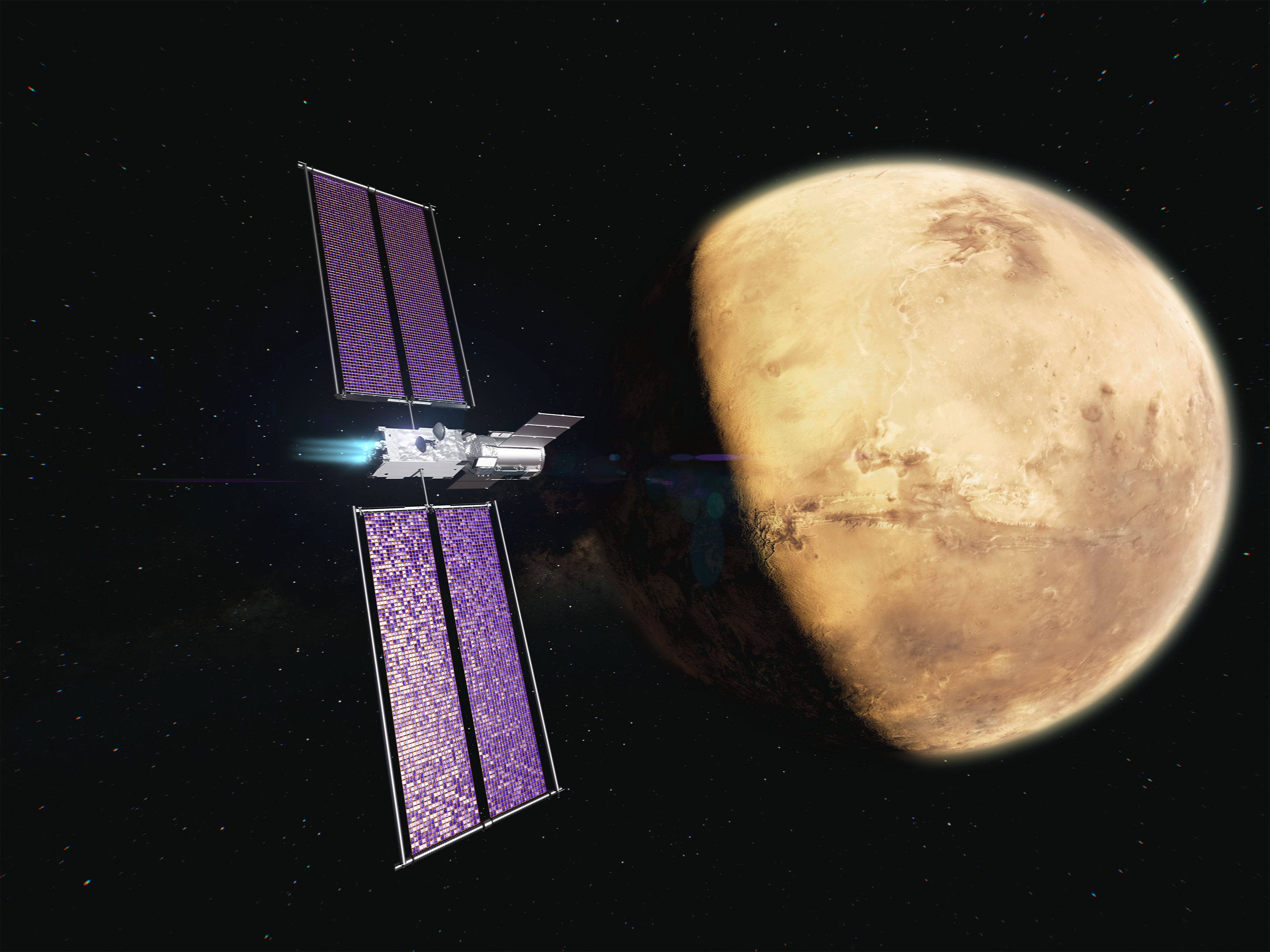
NASA's Space Reactor-1 Freedom cleared its mission design review in October at Glenn Research Center, with teams from NASA, the Department of Energy, and industry converging on key architectural decisions that move the spacecraft from concept to defined design. The mission is targeted for late 2028 — the next Mars launch window — and would be the first fission-powered spacecraft to travel beyond Earth orbit.
Extraction Map
The design has shifted meaningfully since Administrator Jared Isaacman unveiled the concept at NASA's March Ignition event. The boom separating the reactor from the Power and Propulsion Element has been shortened, reducing mass and simplifying assembly. Advances in shielding now allow the reactor to sit closer to the spacecraft body without compromising radiation protection for electronics or the SkyFall payload. Teams are still evaluating radiator panel count, reactor output power levels, and operating duration. SkyFall is the payload that gives SR-1 a destination: a capsule carrying three next-generation helicopters to Mars, where they will study geology, climate history, and search for subsurface ice. The mission profile calls for reactor activation after Earth orbit departure, an initial operating period with performance data transmitted home, reactor shutdown during solar-powered cruise to Mars, SkyFall delivery to Martian orbit, and then reactor restart for additional deep-space performance data collection. The hardware pipeline is materializing. NASA awarded Johns Hopkins Applied Physics Laboratory a $39.3 million contract under ARES II to design, build, test, and deliver the heat rejection system for the nuclear power module. APL is partnering with Advanced Cooling Technologies for heat pipe and composite radiator technologies. This is not a study contract — it covers flight hardware production. The communications architecture is also being upgraded. SR-1 will use larger X-band antenna dishes sized for deep-space data transmission back to Earth, a necessary modification given the Mars-distance link budget. Further design maturation will focus on risk reduction, simplification, and schedule adherence. The strategic logic is explicit in NASA's framing: SR-1 is positioned as infrastructure, not a one-off demonstration. Program director Steve Sinacore called it "the first freight run on the railroad of the solar system" and said what they learn will shape exploration "for decades." The heat rejection contract is specifically designed to establish an "industrial production foundation" for future high-power nuclear systems. NASA is simultaneously building toward reliable surface power for a future Moon Base and propulsion for deeper solar system missions. The 2028 timeline is aggressive. From concept announcement in March 2025 to launch in roughly 42 months, with flight hardware contracts just now being awarded, NASA is compressing a development cycle that would normally stretch far longer. Whether the schedule holds will be the first real test of whether this new approach to nuclear space propulsion can deliver at the pace the agency is promising.
Worth reading?
RECOMMENDED
Score
72
/100
Generative. SR-1 is designed explicitly as infrastructure — nuclear propulsion capability, industrial heat rejection production lines, and deep-space operations data — that enables future missions rather than extracting value from existing systems.
What Is GRIN?
GRIN stands for Generativity, Resilience, Innovation efficiency, and Novelty openness. These four dimensions capture the essential characteristics of any memetic intelligence — whether a nation, a corporation, a religion, or a movement.
About GRINGenerativity
4/5
Resilience
3/5
Efficiency
3/5
Novelty
4/5
Extractive
1/5
Inverted
Does this create new capability or just redistribute existing value?
High generativity by design. Fission propulsion, heat rejection flight hardware, and industrial production foundations create capability that didn't exist. Every subsystem is dual-use for Moon Base and deep solar system missions.
Verified Facts (9)
NASA completed a major review for Space Reactor-1 (SR-1) Freedom and locked in key elements of the spacecraft, which is targeted to launch in 2028
Several key decisions were made at NASA's Glenn Research Center in Cleveland for a major SR-1 mission design review in October
SR-1 will use both nuclear and solar power to deliver SkyFall, a capsule carrying three next-generation helicopters, to Mars
NASA awarded a $39.3 million contract to Johns Hopkins University's Applied Physics Laboratory to develop the heat rejection system
The lab is working with the company Advanced Cooling Technologies as a key strategic commercial partner
Awarded under the Aerospace Research, Development, and Engineering Support II contract
NASA Administrator Jared Isaacman first introduced the concept in March at the agency's Ignition event
One significant change is to use a shorter boom than the one shown in early illustrations
SR-1 Freedom will use larger X-band antenna dishes to send data across deep space back to Earth
More latest news
Read all