REACTOR OUTPUT
20 kW
LAUNCH TARGET
2030
OPERATING LIFE
5 yr
LUNAR NIGHT
14 days
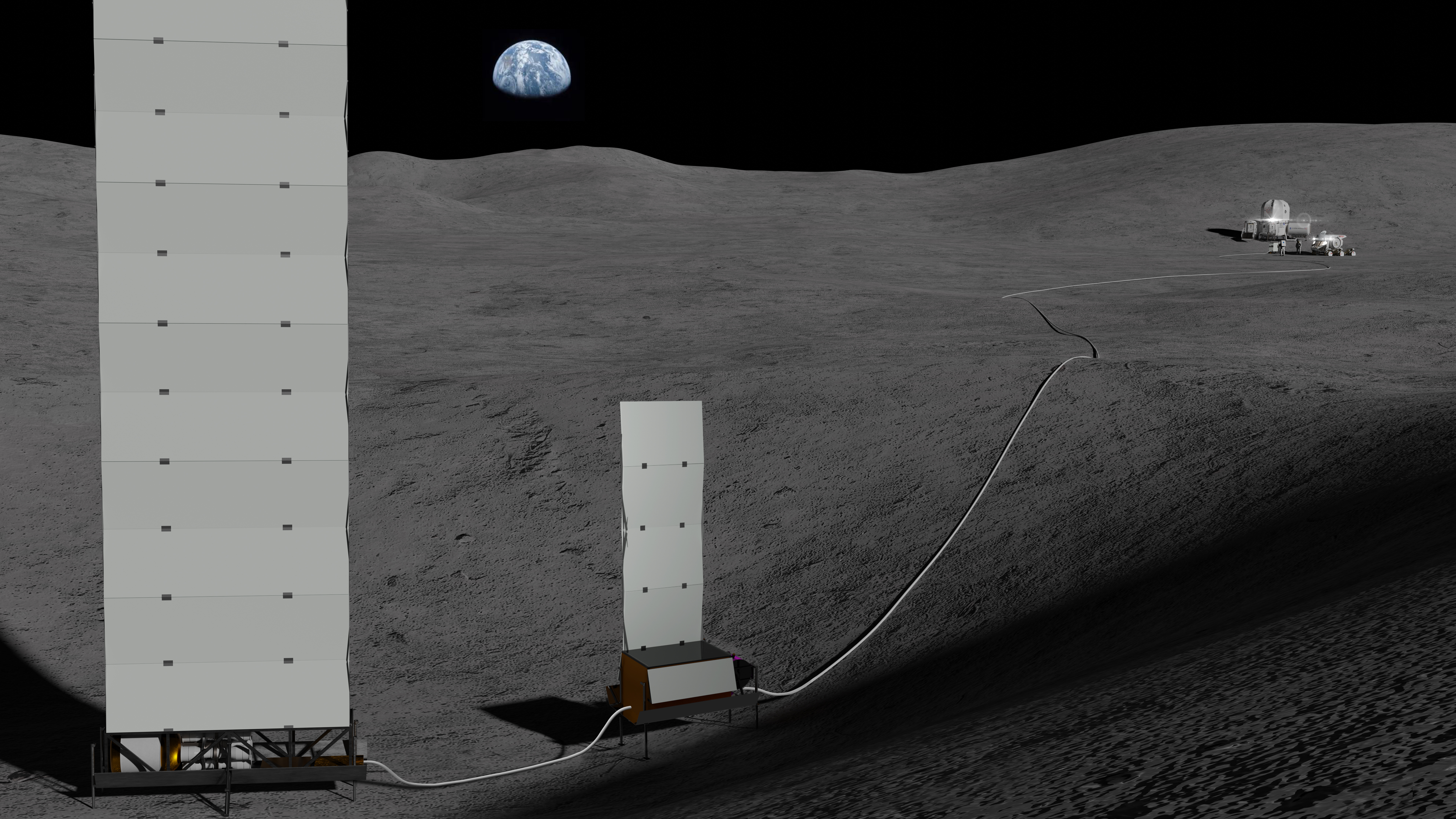
NASA has issued a Request for Proposals for Lunar Reactor-1 (LR-1), a small fission power system designed to generate 20 kilowatts of electricity on the Moon's surface — roughly enough to power 16 average U.S. households. Proposals are due December 21. The agency wants a launch-ready system by 2030, operational for at least five years after deployment. This is not a study or a concept paper. It is a procurement.
Extraction Map
The engineering constraint driving the entire program is the Moon's night. Lunar darkness lasts approximately 14 Earth days. Solar panels are useless during that stretch, which means any permanent base, habitat, communications relay, or scientific station must either carry enormous battery reserves or have a power source that doesn't depend on sunlight. Nuclear fission is the only mature technology that fits. LR-1 is the answer to a bottleneck, not a technology demonstration for its own sake. The solicitation follows a draft proposal released in August and an industry day hosted in September at the Ohio Aerospace Institute in Cleveland. DOE safety standards for nuclear operations are mandated. The RFP also leaves the door open: NASA may issue additional task orders for other space nuclear power systems beyond LR-1, signaling that this is intended as the opening procurement in a broader nuclear space-power pipeline. LR-1 sits alongside a sibling program, Space Reactor-1 (SR-1) Freedom, scheduled to launch in 2028. SR-1 Freedom will deliver three SkyFall helicopters to Mars and demonstrate nuclear electric propulsion — using reactor-generated electricity to drive spacecraft propulsion systems. The Mars application underscores the same logic: dust storms can block sunlight for months, and solar intensity drops with distance from the Sun. Nuclear is the only credible continuous power source beyond Earth orbit. The institutional architecture matters. LR-1 is managed by NASA's Space Reactors Division in partnership with DOE. This is a joint civilian-energy agency effort, not a defense program, though the dual-use implications of space-qualified fission reactors are obvious. The partnership structure distributes technical risk (NASA handles space integration, DOE handles nuclear safety and fuel) but also creates interagency dependencies that can slow procurement. The generative potential here is high. Twenty kilowatts is modest by terrestrial standards but transformative in a lunar context — it enables habitats, rovers, instrument suites, and communications infrastructure to operate continuously regardless of solar conditions. If the 2030 timeline holds, the United States would possess the first operational nuclear power plant on another world, creating a capability that no other nation currently has in development at this readiness level. The risk is timeline slippage. Space nuclear programs have a long history of delay and cancellation (the Kilopower / KRUSTY program took years to reach even ground demonstration). The 2030 target is aggressive for a system that must pass DOE nuclear safety review, survive launch, land on the Moon, and operate autonomously for five years. The procurement structure — industry partnership with government oversight — is designed to accelerate development, but the nuclear regulatory layer adds friction that conventional space hardware doesn't face.
Worth reading?
RECOMMENDED
Score
72
/100
Generative. This creates a genuinely new capability — continuous power on the lunar surface — that doesn't exist today and enables an entire class of downstream activities (habitation, science, resource extraction) that are currently impossible.
What Is GRIN?
GRIN stands for Generativity, Resilience, Innovation efficiency, and Novelty openness. These four dimensions capture the essential characteristics of any memetic intelligence — whether a nation, a corporation, a religion, or a movement.
About GRINGenerativity
4/5
Resilience
3/5
Efficiency
3/5
Novelty
4/5
Extractive
1/5
Inverted
Does this create new capability or just redistribute existing value?
High generativity. 20kW fission on the Moon unlocks continuous operations through 14-day nights — a capability gap no existing technology fills. This expands the pie for every downstream lunar program.
Verified Facts (7)
Lunar Reactor-1 (LR-1) will generate 20 kilowatts of electricity, enough to power approximately 16 average U.S. households annually on Earth
NASA aims to have a launch-ready system by 2030 and operate it on the Moon for at least five years after deployment
Proposals are due by Dec. 21
NASA released a draft proposal in August and hosted an industry day in September at the Ohio Aerospace Institute in Cleveland
Space Reactor-1 (SR-1) Freedom is scheduled to launch in 2028 and will deliver three SkyFall helicopters to Mars
The solicitation requires that the reactor must meet Department of Energy (DOE) safety standards for nuclear operations
Lunar nights last about 14 Earth days, while dust storms on Mars can block sunlight for months
More latest news
Read all