POUNDS CARGO
11,000
CRS MISSION
25th
STAY AT ISS
~6 mo
PARTIES (NG·SPX·NASA)
3
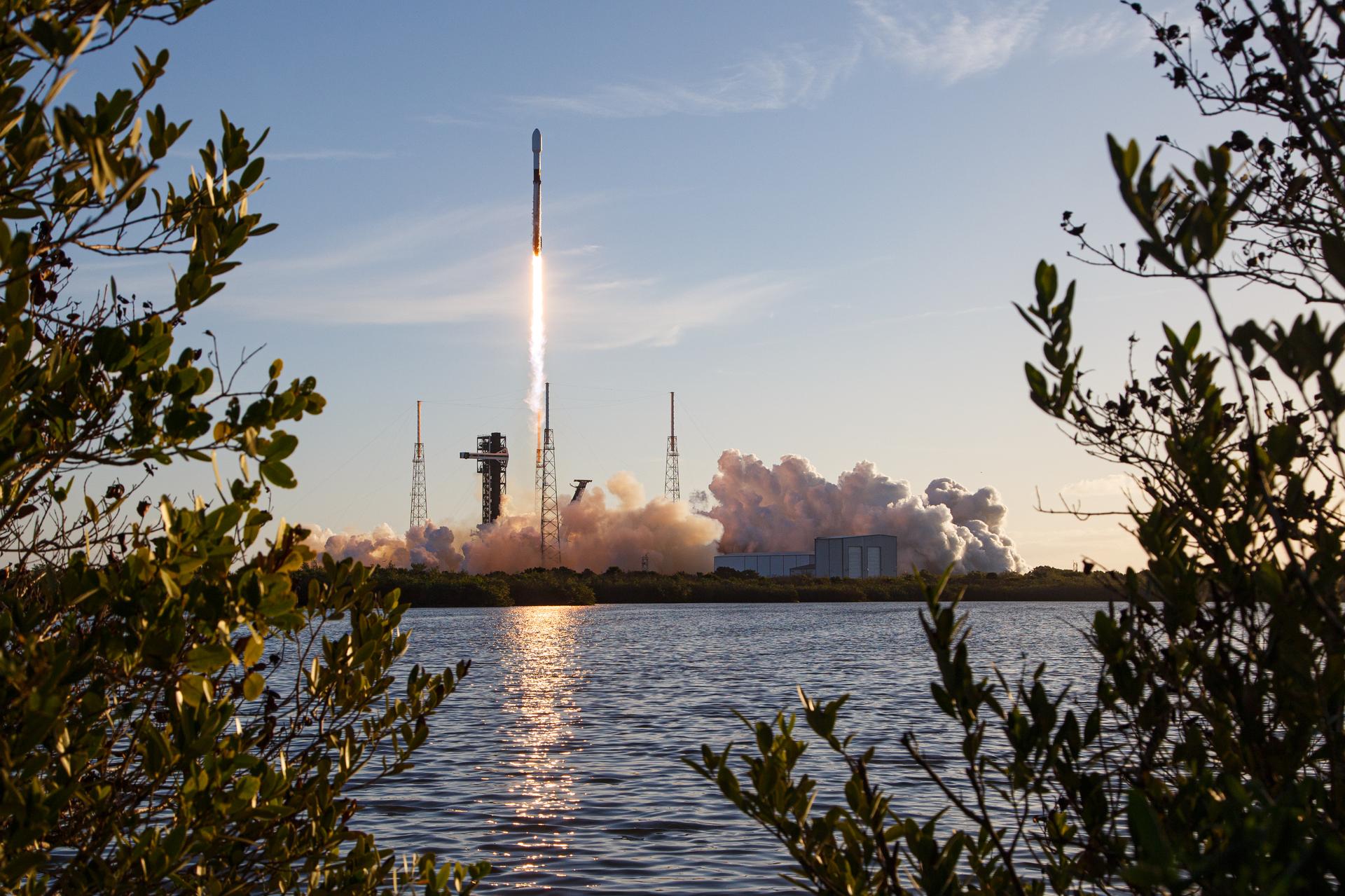
NASA's Northrop Grumman CRS-25 mission is scheduled to launch no earlier than 10:47 a.m. EST on Sunday, November 29, 2026, carrying approximately 11,000 pounds of cargo to the International Space Station aboard a Cygnus XL spacecraft launched on a SpaceX Falcon 9 from Cape Canaveral Space Force Station in Florida. A prelaunch media teleconference is set for Monday, November 23.
Extraction Map
The payload includes experiments designed to improve drug delivery for cancer and osteoarthritis treatment, predict cancer metastasis, advance treatments for muscle loss, improve radiation sensing, and develop food production techniques for long-duration missions. These are incremental research programs — none individually transformative, but collectively they represent the kind of persistent, low-glamour science that justifies keeping the ISS operational. NASA astronauts Jessica Watkins and Luke Delaney will capture the Cygnus XL using the Canadarm2 robotic arm on Tuesday, December 1, with ground controllers then berthing it to the Unity module's Earth-facing port. The spacecraft is scheduled to remain attached until May 2027, when it will depart loaded with disposal items and burn up during reentry. The mission architecture itself tells a story about how LEO logistics actually works now. Northrop Grumman builds the spacecraft, SpaceX provides the launch vehicle, NASA manages the contracts — a three-party commercial arrangement that has become so routine it barely registers as news. CRS-24, the previous mission, launched April 11, 2026, using the same configuration. Northrop Grumman named the spacecraft the S.S. James "Jim" A. Lovell, honoring the astronaut who flew Gemini VII, Gemini XII, Apollo 8, and the Apollo 13 mission around the Moon. The naming convention is a small institutional tradition that connects the cargo-truck era of spaceflight to its heroic predecessor. The operational cadence here is the point. The ISS commercial resupply program has normalized orbital logistics to the degree that an 11,000-pound delivery is a press release, not a front page. That normalization is itself an achievement — it means the supply chain works, the contracts function, and the science pipeline has reliable access to microgravity. Whether that pipeline justifies its cost is a separate question, but the machinery is undeniably functional. The broader question is what happens when ISS deorbits. NASA's Low Earth Orbit transition strategy depends on commercial stations replacing ISS, but none are operational yet. Every CRS mission that runs smoothly reinforces the case that commercial operators can sustain orbital infrastructure — while simultaneously highlighting how dependent the entire ecosystem remains on government contracts.
Worth reading?
OPTIONAL
Score
56
/100
Mildly generative — sustains a functioning science pipeline and validates commercial LEO logistics, but the value creation is incremental and highly dependent on continued government funding.
What Is GRIN?
GRIN stands for Generativity, Resilience, Innovation efficiency, and Novelty openness. These four dimensions capture the essential characteristics of any memetic intelligence — whether a nation, a corporation, a religion, or a movement.
About GRINGenerativity
3/5
Resilience
2/5
Efficiency
4/5
Novelty
1/5
Extractive
1/5
Inverted
Does this create new capability or just redistribute existing value?
Modest generativity. Delivers cancer, muscle-loss, and food-production research to microgravity — none individually transformative, but the pipeline sustains continuous science output from a $100B facility.
Verified Facts (9)
Approximately 11,000 pounds of cargo aboard Cygnus XL spacecraft
Launch targeting no earlier than 10:47 a.m. EST, Sunday, Nov. 29
SpaceX Falcon 9 from Space Launch Complex 40 at Cape Canaveral Space Force Station
NASA astronauts Jessica Watkins and Luke Delaney will capture Cygnus XL using Canadarm2 on Tuesday, Dec. 1
Spacecraft scheduled to remain at ISS until May 2027
CRS-24 launched Saturday, April 11, 2026
Named S.S. James 'Jim' A. Lovell after the astronaut who flew Gemini VII, Gemini XII, Apollo 8, and Apollo 13
Prelaunch teleconference Monday, Nov. 23 at 12 p.m.
Experiments include cancer drug delivery, osteoarthritis treatment, cancer spread prediction, muscle loss treatment, radiation sensing, and food production
More latest news
Read all