Get tickets
NASA Space Apps Challenge
on Official site
REGISTRANTS
181,835
YOY GROWTH
+59%
GLOBAL EVENTS
593
AGENCY PARTNERS
17
NASA's annual Space Apps Challenge just posted its biggest numbers yet: 181,835 registered participants across 593 local events worldwide on November 14-15, a 59% jump over the prior year and the fifth consecutive year of growth. Since 2012, the program has drawn more than 600,000 cumulative participants from over 190 countries.
Extraction Map
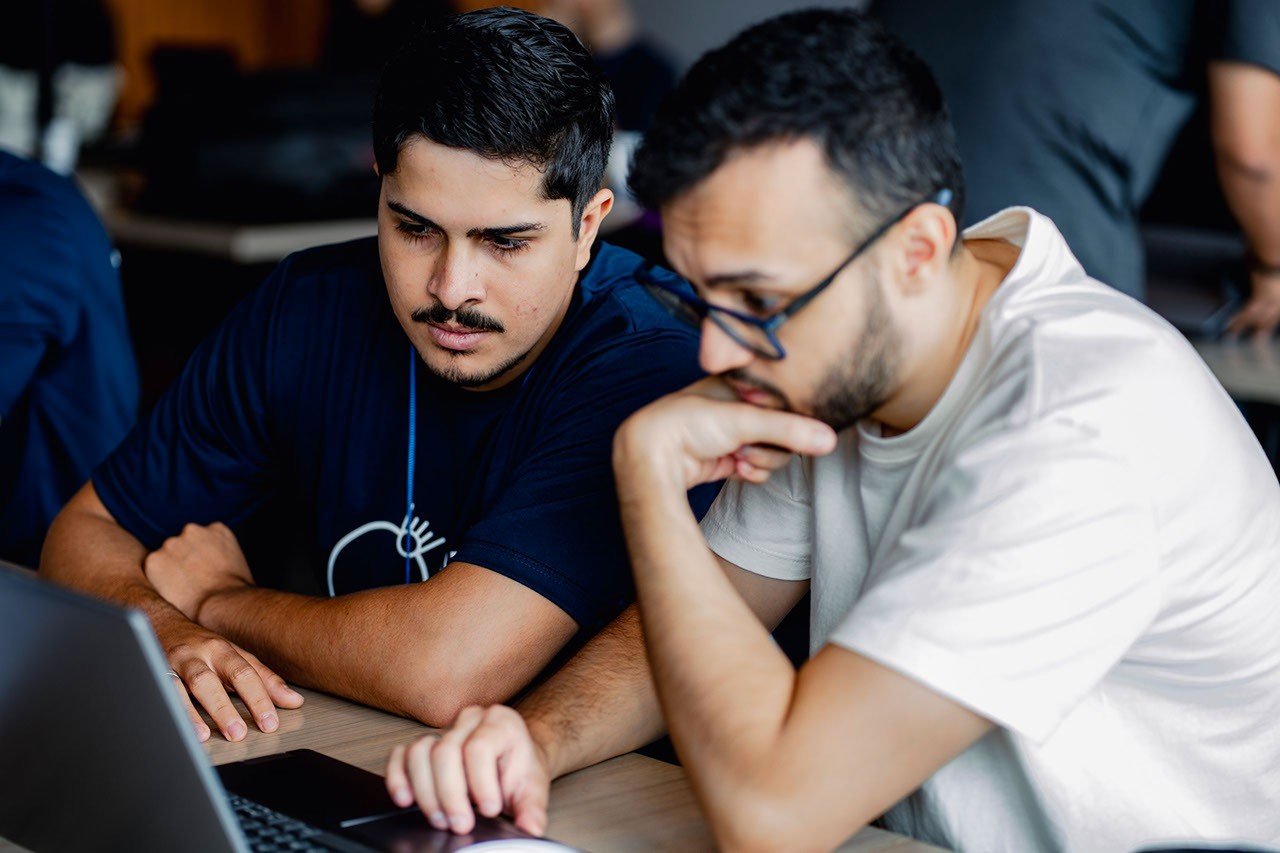
The format is straightforward. Teams self-organize at volunteer-run local events, pick one of 14 challenges rooted in Earth science or space exploration, and build a project using NASA's open datasets within two days. Ten global winners will be announced in January. The challenges also draw data from 17 international space agency partners — all Artemis Accord signatories — spanning agencies from Angola's GGPEN to the UK Space Agency. Three partner agencies (GGPEN, AEB, CONAE) contributed challenge prompts this year. What makes Space Apps structurally interesting is the generativity model. NASA supplies high-quality open data and a coordination framework; local volunteers supply logistics; participants supply labor and ideas. The agency extracts no IP and charges no fees. The output — thousands of prototype projects addressing real scientific questions — is a byproduct of intrinsic motivation and community infrastructure, not procurement contracts. The 59% registration surge is striking but raises the efficiency question. Registration is not completion, and completion is not impact. Ten global winners from 181,835 registrants is a conversion funnel of roughly 0.005%. The vast majority of projects will never move past hackathon stage. That is not necessarily a failure — the program's value may be more in capacity-building and science literacy than in shipping products — but it means the generative output is diffuse rather than concentrated. The international breadth is genuine. Having 17 space agencies contribute data, and three write challenges, transforms this from a NASA outreach exercise into a lightweight multilateral science platform. The Artemis Accords linkage is deliberate — participation doubles as soft-power alignment. Countries like Angola, Senegal, Nigeria, and Paraguay gain hands-on access to space-grade datasets their national programs could not produce alone. Amy Kaminski, engagement branch chief at NASA's Science Mission Directorate, framed the value around the datasets: 'gold-standard datasets to address real challenges facing us here on Earth and in space.' The language is careful — NASA is positioning itself as a data utility, not a gatekeeper. That posture is what keeps the program scaling. The structural risk is stagnation behind growth numbers. If registration keeps climbing but the quality and follow-through of projects plateaus, the program becomes a participation trophy at planetary scale. The test is whether any Space Apps projects eventually feed back into actual NASA missions or commercial applications. That pipeline — from hackathon prototype to operational tool — is the missing piece the numbers alone cannot reveal.
Worth reading?
ESSENTIAL
Score
80
/100
Generative — NASA supplies open data and coordination infrastructure at minimal marginal cost, creating distributed capacity-building across 190+ countries with no IP extraction or fee barriers.
What Is GRIN?
GRIN stands for Generativity, Resilience, Innovation efficiency, and Novelty openness. These four dimensions capture the essential characteristics of any memetic intelligence — whether a nation, a corporation, a religion, or a movement.
About GRINGenerativity
4/5
Resilience
4/5
Efficiency
2/5
Novelty
5/5
Extractive
0/5
Inverted
Does this create new capability or just redistribute existing value?
Genuine capacity-builder. Open data plus volunteer coordination creates thousands of prototypes annually, though conversion from hackathon project to real-world tool remains unproven at scale.
Verified Facts (11)
181,835 registered participants
593 events around the world
59% more registrants than prior year
5th year in a row with increased participation
Since 2012, more than 600,000 people from more than 190 countries
14 challenges focused on space exploration or Earth science
10 global winners to be announced in January
17 international space agency partners, all Artemis Accord signatories
Three agencies, GGPEN, AEB, and CONAE, also wrote challenges this year
Amy Kaminski, engagement branch chief, Science Mission Directorate, NASA Headquarters in Washington
Event held Nov. 14 and 15
More latest news
Read all