Get tickets
Swift Boost Mission
on NASA
YEARS IN ORBIT
21
CONTRACT TO LAUNCH
<1 yr
SWIFT LAUNCHED
2004
CONTRACT AWARDED
Sep 2025
NASA's Neil Gehrels Swift Observatory, the agency's premier gamma-ray burst detector since 2004, is falling out of the sky. Increased solar activity has accelerated orbital decay in its low Earth orbit, and without intervention the telescope faces atmospheric reentry. NASA chose not to let it go quietly.
Extraction Map
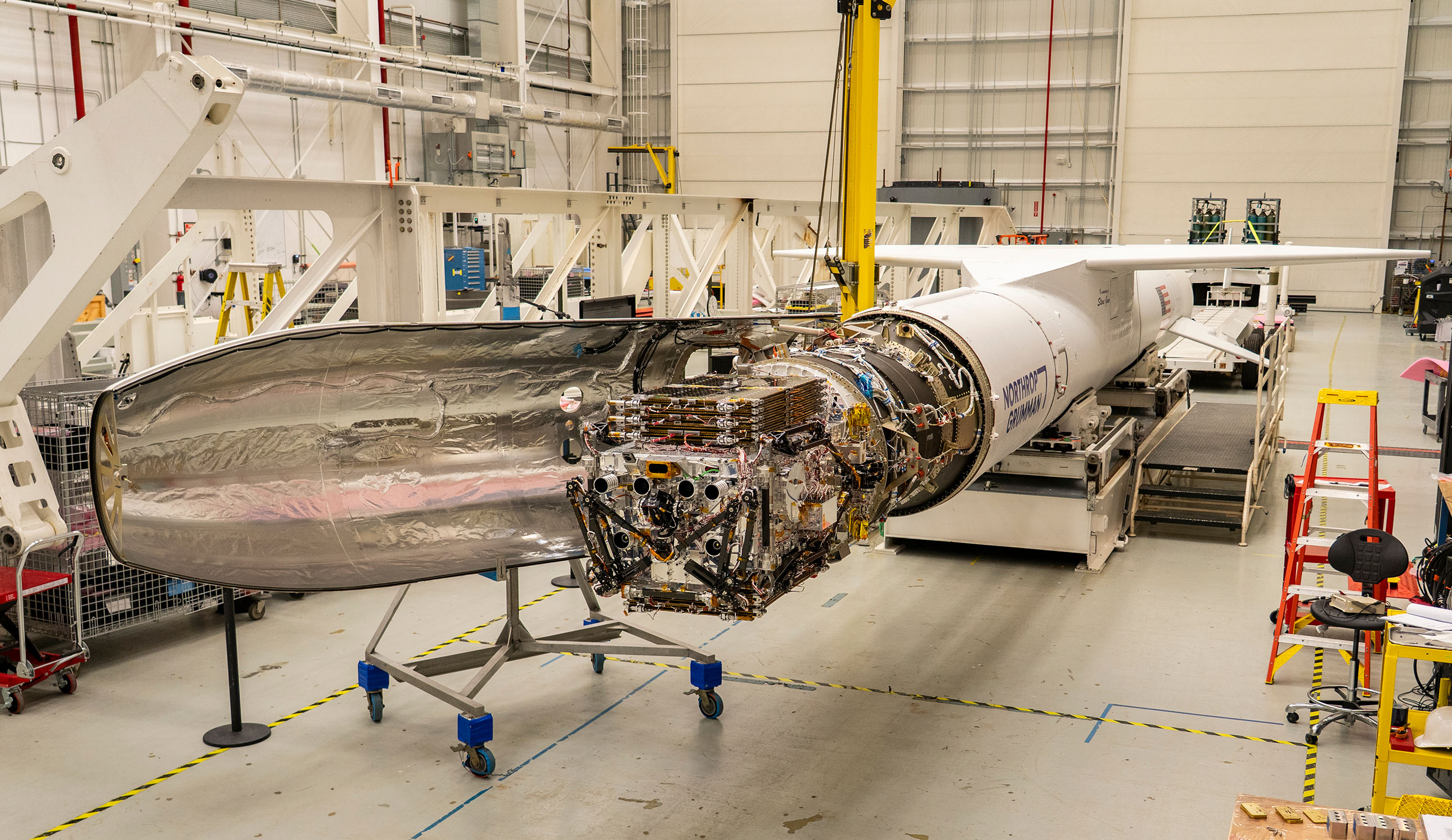
In September 2025, NASA awarded Katalyst Space a contract to mount a robotic servicing mission for Swift in less than a year. Katalyst's spacecraft, called LINK, will launch aboard a Northrop Grumman Pegasus XL rocket from Kwajalein Atoll in the Marshall Islands later this month, rendezvous with Swift, and boost it to a higher altitude. The timeline — contract to launch in roughly nine months — is aggressive by any space program standard. The mission does double duty. It extends Swift's science lifespan, preserving an instrument that serves as a cosmic "dispatcher" for the global astronomy community, alerting other telescopes when high-energy transient events erupt. But the structural play is the servicing demonstration itself. NASA is explicitly framing this as advancing U.S. spacecraft servicing technology — a capability that, if proven reliable, changes the economics of every satellite in orbit. A media teleconference on June 17 will feature NASA Astrophysics division director Shawn Domagal-Goldman, Swift principal investigator Brad Cenko from Goddard Space Flight Center, LINK principal investigator Kieran Wilson from Katalyst Space, Katalyst VP Robert Lamontagne, and Northrop Grumman VP of launch systems Wes Collier. The lineup signals the public-private architecture NASA is betting on: agency science leadership paired with commercial servicing and launch. The Pegasus XL air-launch vehicle, dropped from a carrier aircraft rather than launched from a pad, gives the mission access to the orbital inclination Swift occupies without requiring a traditional launch site. Wallops Flight Facility in Virginia handled LINK's encapsulation on June 8; the launch itself targets Kwajalein later in June. Swift's 21-year run already far exceeds typical mission design life. The observatory has been central to multi-messenger astronomy, providing rapid-response observations of gamma-ray bursts, supernovae, and other transient phenomena. Letting it deorbit would remove a unique rapid-response capability from the fleet with no direct replacement in the pipeline. The real question is whether this mission establishes a repeatable commercial servicing model or remains a one-off rescue. If LINK succeeds, the precedent is set: aging but functional spacecraft can be extended through commercial robotic servicing contracts, shifting the calculus from "build new" to "maintain what works." If it fails, the concept still gets a real-world flight test — but Swift's clock keeps ticking.
Worth reading?
RECOMMENDED
Score
76
/100
Generative. NASA is using a telescope rescue to seed a commercial in-space servicing industry, creating capability that didn't previously exist at this speed or price point.
What Is GRIN?
GRIN stands for Generativity, Resilience, Innovation efficiency, and Novelty openness. These four dimensions capture the essential characteristics of any memetic intelligence — whether a nation, a corporation, a religion, or a movement.
About GRINGenerativity
4/5
Resilience
3/5
Efficiency
4/5
Novelty
4/5
Extractive
1/5
Inverted
Does this create new capability or just redistribute existing value?
Strongly generative. Extends a 21-year science asset AND proves robotic servicing as a commercial capability — two new value streams from one contract.
Verified Facts (9)
Swift mission launched in 2004
Swift's low Earth orbit has begun to rapidly decay because of increased solar activity
In September 2025, NASA awarded a contract to Katalyst to mount a robotic servicing mission for Swift in less than a year
LINK spacecraft will launch on Northrop Grumman's Pegasus XL rocket
Launch targeted from Kwajalein Atoll in the Marshall Islands
Media teleconference at 11 a.m. EDT, Wednesday, June 17
LINK encapsulation at NASA's Wallops Flight Facility on June 8, 2026
Swift serves as a dispatcher for gamma-ray bursts and other transient events
Participants include Shawn Domagal-Goldman, Brad Cenko, Kieran Wilson, Robert Lamontagne, Wes Collier
More latest news
Read all