IMAGE & VIDEO FILES
11,500
LUNAR OBSERVATION
~7 hrs
DATA COLLECTION
45 days
CREW · LIFETIME MONITORING
4
NASA's Artemis II crew — Reid Wiseman, Victor Glover, Christina Koch, and CSA astronaut Jeremy Hansen — splashed down in the Pacific on April 10 after a record-setting lunar flyby. The mission's public narrative ended there. The science didn't.
Extraction Map
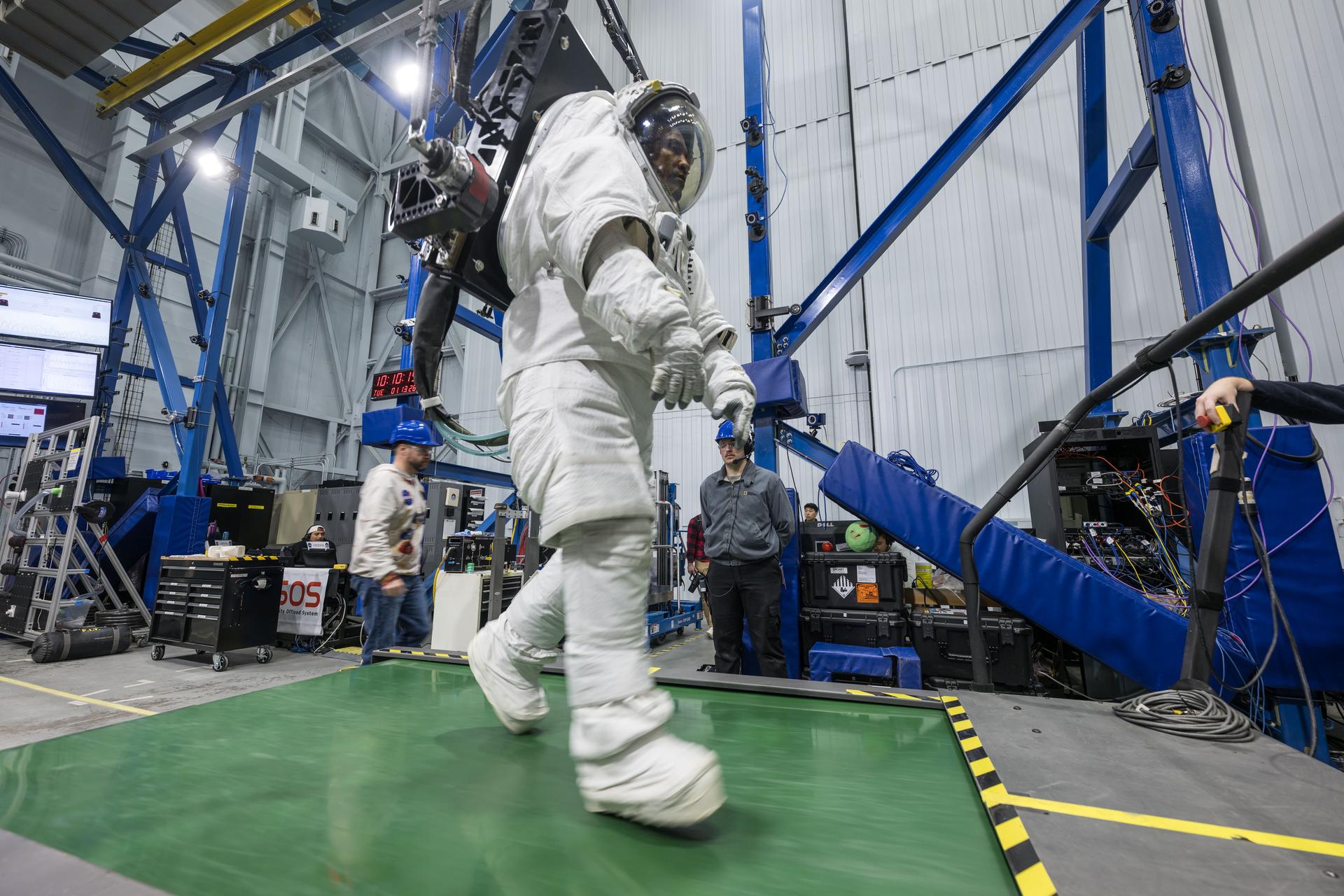
Within 24 hours of splashdown, researchers began collecting data for the Spaceflight Standard Measures study: blood pressure, heart rate, eye health, motor control. Crew members ran a mini obstacle course — lying down, standing up, unfurling a rope ladder, climbing — to benchmark how quickly the body readapts to gravity. Over the following days at Johnson Space Center, astronauts repeated obstacle courses in spacesuits offloaded to lunar gravity (one-sixth Earth's). The question isn't academic: on the Moon or Mars, there's no ground crew to help you stand up. The Immune Biomarkers study is comparing pre-, in-flight, and postflight blood and saliva samples to track whether dormant viruses reactivate in deep space. The ARCHeR study combined postflight cognition tests and simulated docking tasks with in-flight wrist-device data to map the effect of space hazards on performance. Initial data collection concluded 45 days after splashdown, but medical teams will monitor these four astronauts for life. The most forward-looking element is AVATAR — organ chips containing bone marrow cells from each astronaut, flown around the Moon aboard Orion and now under analysis at Emulate's lab in Boston using single-cell RNA sequencing. Scientists are comparing flown chips against ground controls and crew blood samples. The endgame: send an astronaut's personalized organ chips ahead on future missions to develop custom medical kits before the crew even arrives. During Orion's closest lunar approach on April 6, crew members spent nearly seven hours photographing and describing geological features — impact craters, ancient lava flows, surface faults and ridges — guided by a minute-by-minute observation plan. They noted variations in color, brightness, and texture that provide clues to surface composition and history. Scientists plan to release initial data interpretations later this year. NASA will publish more than 100 science-related audio recordings with transcripts and approximately 11,500 Earth and Moon image and video files through the Planetary Data System. Files are being converted to standard, searchable formats for long-term archival access. A separate report on how lunar science observations were planned, organized, and executed will serve as an operational template for future Artemis missions. The structural logic is clear: Artemis II wasn't primarily about getting four people around the Moon. It was about generating the biological, operational, and geological data infrastructure that makes a permanent lunar presence survivable. The organ-chip pathway alone — if it works — transforms crew health from reactive medicine to predictive, personalized preparation. The data pipeline being built here is the real deliverable.
Worth reading?
ESSENTIAL
Score
80
/100
Generative. This is public-funded research producing open data, reusable operational templates, and medical knowledge with applications beyond spaceflight. Value flows outward to future missions, the scientific community, and potentially civilian medicine.
What Is GRIN?
GRIN stands for Generativity, Resilience, Innovation efficiency, and Novelty openness. These four dimensions capture the essential characteristics of any memetic intelligence — whether a nation, a corporation, a religion, or a movement.
About GRINGenerativity
4/5
Resilience
4/5
Efficiency
3/5
Novelty
4/5
Extractive
0/5
Inverted
Does this create new capability or just redistribute existing value?
Strongly generative. Every study — organ chips, immune biomarkers, gravity adaptation — creates reusable knowledge for Artemis III+ and Mars. The AVATAR personalized-medicine pathway could reshape crew preparation entirely.
Verified Facts (9)
NASA's Artemis II crew members safely splashed down in the Pacific Ocean on April 10
Crew members: NASA astronauts Reid Wiseman, Victor Glover, Christina Koch, and CSA astronaut Jeremy Hansen
Lunar gravity is roughly one-sixth the force of Earth's gravity
Initial data collections for Artemis II health studies concluded 45 days after splashdown
Medical teams will continually monitor astronaut health throughout the Artemis II crew members' lifetimes
Organ chips included bone marrow cells from each Artemis II astronaut
Scientists are comparing the chips flown aboard the spacecraft to ground controls and crew blood samples using advanced techniques, including single-cell RNA sequencing
On April 6, the Artemis II crew members studied features on and around the Moon for nearly seven hours
NASA will publish more than 100 science-related audio recordings with transcripts, as well as approximately 11,500 Earth and Moon image and video files
More latest news
Read all