STUDENTS
500+
TEAMS
120
STATES
8
MISSION OBJECTIVES
8
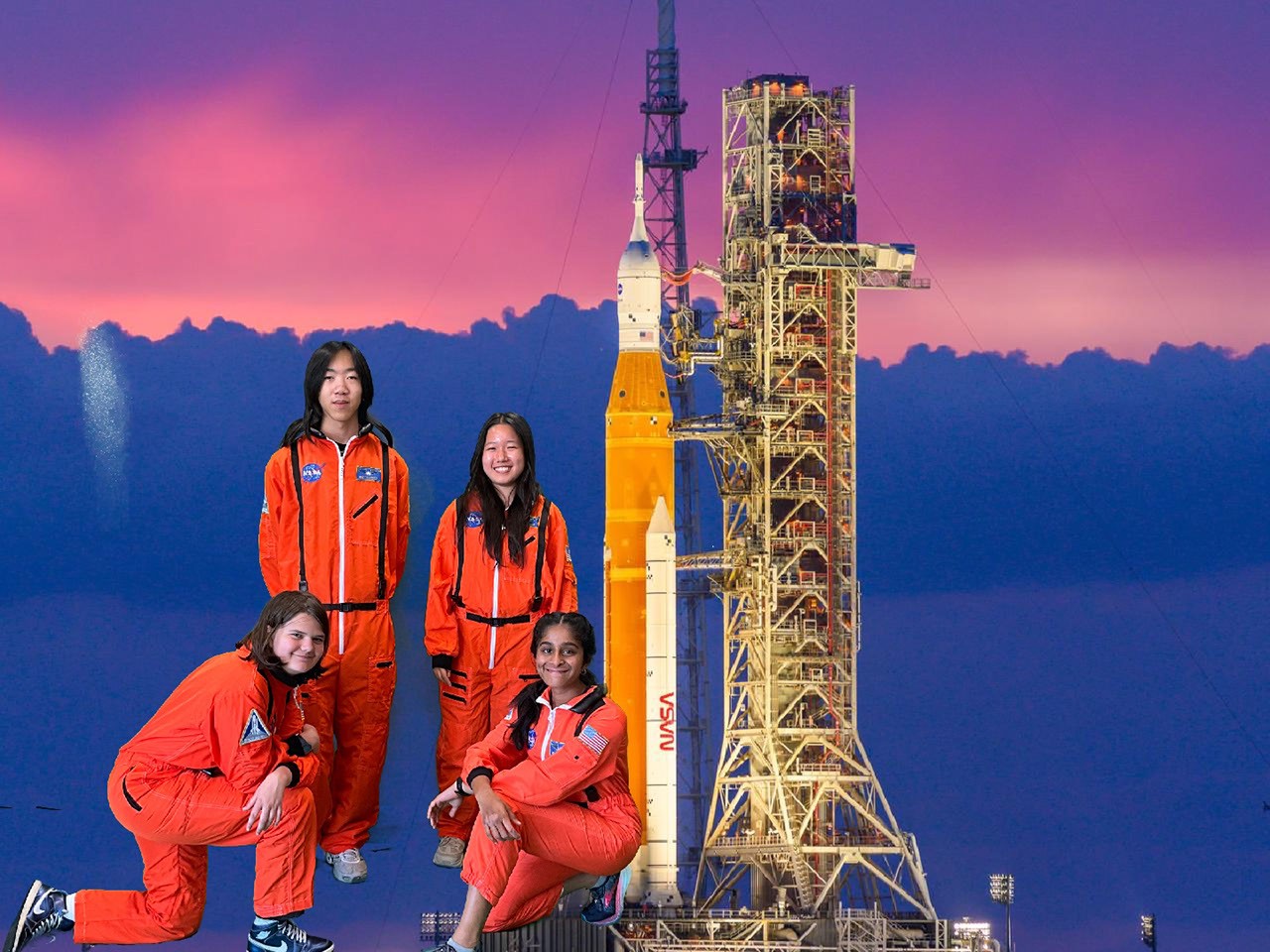
NASA's Northwest Earth and Space Science Pathways project just wrapped its 2025–2026 ROADS from Earth to Venus challenge, and the numbers tell a straightforward story: 500-plus students, 120 teams, eight states, one academic year of mission-style STEM work. Led by Central Washington University under cooperative agreement 80NSSC22M0006, the program sits inside NASA's Science Activation Portfolio — the agency's formal mechanism for converting taxpayer-funded science into educational reach.
Extraction Map
The structure matters more than the branding. Teams of upper elementary through high school students worked through eight Mission Objectives spanning carbon cycle modeling, greenhouse effect investigation, kite-mounted remote sensing, and rover programming on Venus-simulated terrain. These are not science-fair poster boards. Students documented work in Mission Development Logs, designed mission patches, and presented through both virtual submissions and regional Hub events — a scaffolded workflow that mirrors actual mission development cadence. Three university partners — Central Washington University, Montana State University, and Northern Arizona University — hosted in-person Hub events in April and May 2026, giving students campus exposure alongside peer presentations. The geographic spread is notable: recognized teams came from Silverdale, Mukilteo, and Sequim in Washington; Safford, Arizona; Hardin and Columbus in Montana; and Medford, Oregon. This is not a coastal-metro program. It reaches into rural and small-city school districts where STEM infrastructure is thinnest. The educator pipeline runs parallel. Professional development began in August 2025, meaning teachers and mentors received training before students ever touched the challenge. This front-loading is what separates functional STEM outreach from symbolic gestures — you cannot scale student capability without first building educator capacity. Recognized teams ranged from elementary (The Evil Twins, The Acid Clouds, Flaming Asteroid Nebulas, The NASA Intelligence — all Silverdale, WA) through middle school (Venus Ascenders, Project Fuego Venus, Galaxy Dragons, The Four Folds, Crater Lake Crusaders spanning four states) to high school (Laborantem, Velocity to Venus, Puget Sound Propulsion, Evergreen Explorers). The cross-division structure means a student can enter this pipeline in fourth grade and ride it through graduation. The honest question is scale. Five hundred students across eight states is real work, but it is a rounding error against the 50 million K-12 students in the U.S. The ROADS framework — open-access activities and resources available at www.nwessp.org — suggests the designers know this and are building for replication, not just participation. Whether university-hosted Hub events can scale beyond three partner institutions without proportional funding increases is the structural bottleneck. Dr. Darci Snowden, NESSP's director, frames the value correctly: students develop confidence and skills to see themselves as future scientists and engineers. The pipeline question is whether the system can convert that identity formation into actual STEM career entry at measurable rates — and whether the funding mechanism (NASA cooperative agreements) is durable enough to sustain multi-year cohort tracking.
Worth reading?
RECOMMENDED
Score
72
/100
Generative — this program builds real human capital through hands-on mission-style STEM work, distributing NASA-funded capability to rural and small-city school districts across the Northwest.
What Is GRIN?
GRIN stands for Generativity, Resilience, Innovation efficiency, and Novelty openness. These four dimensions capture the essential characteristics of any memetic intelligence — whether a nation, a corporation, a religion, or a movement.
About GRINGenerativity
4/5
Resilience
3/5
Efficiency
3/5
Novelty
3/5
Extractive
0/5
Inverted
Does this create new capability or just redistribute existing value?
Genuine capability building. Rover programming, remote sensing, carbon modeling — these are transferable technical skills seeded in K-12 students who otherwise lack access. 500 students is small but the framework is designed for replication.
Verified Facts (13)
More than 500 students on 120 teams from eight states
Cooperative agreement award number 80NSSC22M0006
Led by Central Washington University in Ellensburg, Washington
Hub events hosted by Central Washington University, Montana State University, and Northern Arizona University
Educator professional development began August 2025
Teams worked through challenge checkpoints from January through May 2026
In-person Hub events held in April and May 2026
Elementary Division: The Evil Twins, The Acid Clouds, Flaming Asteroid Nebulas, The NASA Intelligence — all from Silverdale, Washington
Middle School Division: Venus Ascenders (Mukilteo, WA), Project Fuego Venus (Safford, AZ), Galaxy Dragons (Sequim, WA), The Four Folds (Hardin, MT), Crater Lake Crusaders (Medford, OR)
High School Division: Laborantem (Columbus, MT), Velocity to Venus (Sequim, WA), Puget Sound Propulsion (Mukilteo, WA), Evergreen Explorers (Mukilteo, WA)
Dr. Darci Snowden, Director of NESSP
NESSP website at www.nwessp.org
NESSP YouTube channel @nwessp
More latest news
Read all