CHAPEA MISSION
2
DAYS ISOLATED
365
SQ FT HABITAT
1,700
MISSIONS PLANNED
3
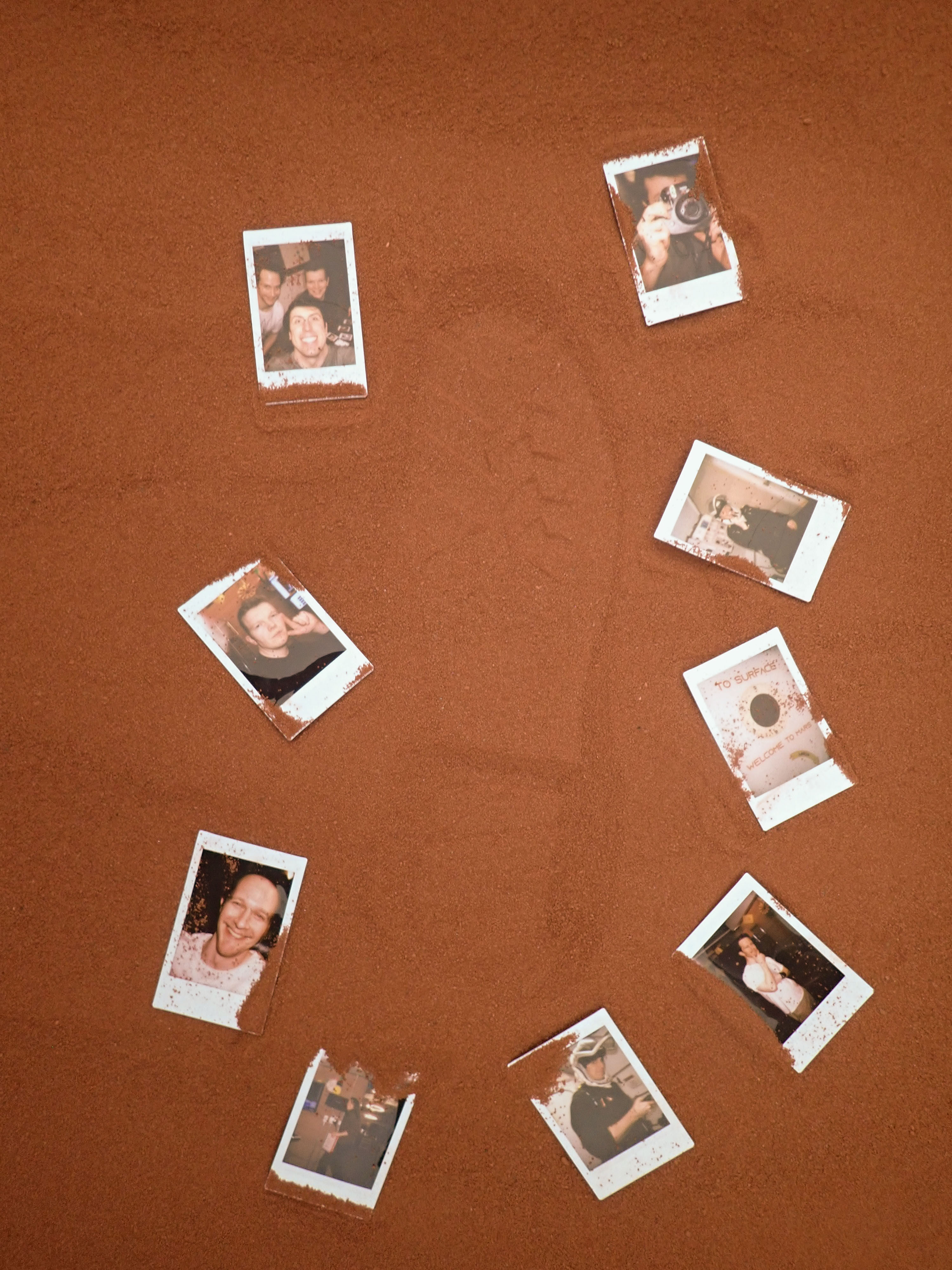
NASA released imagery of the CHAPEA Mission 2 crew arranged around a boot print pressed into simulated Martian sand outside their habitat at Johnson Space Center. The photos mark a symbolic milestone in the second year-long analog mission, where volunteer crew members live and work inside a 1,700-square-foot 3D-printed habitat designed to replicate the isolation, resource constraints, and operational cadence of a Mars surface mission.
Extraction Map
CHAPEA — Crew Health and Performance Exploration Analog — is NASA's flagship ground-based simulation program for understanding the human factors that will govern whether a crewed Mars mission succeeds or fails. Mission 1 concluded in 2024. Mission 2 began in spring 2025. A third mission is planned. The program tests everything from crew psychology and group dynamics under confinement to food systems, exercise protocols, and communication delays. The boot print image is deliberately evocative — it echoes Apollo 11's iconic lunar footprint, signaling NASA's intention to frame Mars as the next destination in the same lineage. But the substance underneath the symbolism matters more: these analog missions generate physiological and psychological data that no robotic mission or short-duration ISS stay can replicate. Year-long confinement with a small crew under simulated mission constraints is the closest thing to a Mars transit without leaving Earth. The generative value here is real but slow-burning. CHAPEA produces no hardware, no launch capability, and no propulsion breakthroughs. What it produces is the human-systems knowledge base — sleep architecture under isolation, conflict resolution protocols, dietary requirements, exercise countermeasures — that will determine crew selection criteria and habitat design for an eventual mission. This is infrastructure for decisions that won't be made for a decade or more. Critically, CHAPEA is low-cost relative to flight programs. The habitat was 3D-printed using ICON's Lavacrete technology, doubling as a test of in-situ construction methods. The entire program runs at a fraction of the cost of a single SLS launch. For NASA's constrained budget environment, analog programs represent high-information-per-dollar investments. The risk is that CHAPEA remains a simulation exercise disconnected from flight readiness timelines. Without a committed Mars mission architecture and funding profile, the data generated feeds studies and papers but not hardware decisions. The program's value is contingent on a political commitment that does not yet exist. If Mars slips another two decades, CHAPEA's findings age out before they're applied. Still, as a knowledge-generation program, CHAPEA is doing exactly what early-stage R&D should do: building the evidence base cheaply so that when the political and budgetary window opens, the human-factors questions are already answered. The boot print is symbolic. The data behind it is not.
Worth reading?
RECOMMENDED
Score
64
/100
Generative but contingent — CHAPEA builds genuine human-systems knowledge at low cost, but its value is locked behind a Mars mission commitment that does not yet exist.
What Is GRIN?
GRIN stands for Generativity, Resilience, Innovation efficiency, and Novelty openness. These four dimensions capture the essential characteristics of any memetic intelligence — whether a nation, a corporation, a religion, or a movement.
About GRINGenerativity
3/5
Resilience
2/5
Efficiency
4/5
Novelty
2/5
Extractive
0/5
Inverted
Does this create new capability or just redistribute existing value?
Genuine capability builder. Produces irreplaceable human-factors data — sleep, psychology, nutrition, group dynamics — that no robotic or short-duration mission can replicate. Value is real but latent until a Mars architecture is funded.
Verified Facts (1)
Photos of the CHAPEA Mission 2 crew are arranged around a boot print in the simulated Martian sand outside their habitat.
More latest news
Read all