TOP SPEED
Mach 1.1
MPH
713
FLIGHT MINS
81
YEARS BANNED
53
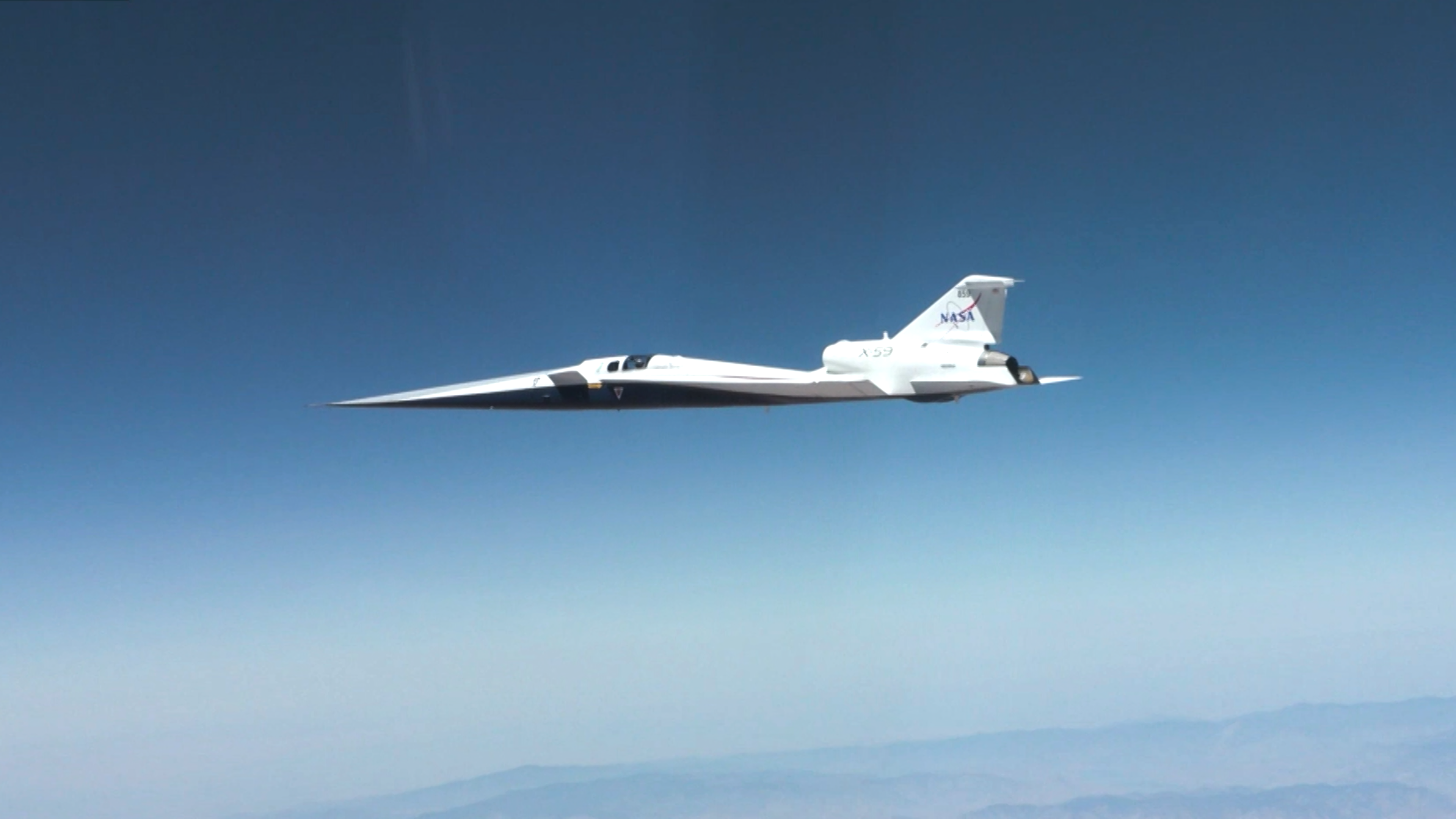
On June 5, 2026, NASA test pilot Jim "Clue" Less flew the X-59 experimental aircraft past Mach 1 for the first time, reaching approximately Mach 1.1 — 713 mph — during an 81-minute flight from Edwards Air Force Base in California. The flight tested handling qualities at both subsonic and supersonic speeds. It is the first supersonic flight for the airframe that NASA has spent over a decade designing.
Extraction Map
The X-59 is the centerpiece of NASA's Quesst mission, and its purpose is not raw speed. The aircraft is shaped to produce a quiet "thump" instead of the thunderclap sonic boom that got supersonic overland flight banned by the FAA in 1973. This first supersonic flight validated the airframe's flying qualities at speed; the quiet-boom demonstration flights come later this year. The policy target is clear: NASA intends to collect community noise data from flights over populated areas and hand that data to the FAA and ICAO. If the noise measurements confirm the X-59's design predictions, regulators would have the evidence base to write new rules permitting quiet supersonic flight over land — something no commercial operator has been allowed to do since Concorde was restricted to ocean routes. The generative potential here is real but distant. A new regulatory framework for supersonic overland flight would open a market that currently does not exist. Companies like Boom Supersonic have airframes in development but no route network over land. The X-59 is the regulatory key, not the commercial product itself. The efficiency question is NASA at its best and most frustrating. This is a government research program producing a public good — noise data and regulatory science — that no private company would fund because the payoff is a rule change, not a product. The friction cost is time: the Quesst mission has been in development since the early 2010s, and commercial supersonic flight over land is still years away even in the optimistic scenario. Resilience cuts both ways. If the quiet-boom data holds up, it diversifies commercial aviation's speed envelope and creates new route possibilities. But the entire program funnels through a single experimental airframe. One crash, one structural failure, and the regulatory timeline resets by a decade. The novelty dimension is where this story earns its weight. The 1973 ban has stood for over 50 years. NASA is not lobbying to change it — they are generating the scientific evidence that makes the change defensible. That is how institutional novelty works when it works: evidence first, then rules.
Worth reading?
RECOMMENDED
Score
72
/100
Generative. NASA is producing public-good research (noise data, regulatory science) that no private actor would fund, aimed at creating an entirely new commercial flight category over land.
What Is GRIN?
GRIN stands for Generativity, Resilience, Innovation efficiency, and Novelty openness. These four dimensions capture the essential characteristics of any memetic intelligence — whether a nation, a corporation, a religion, or a movement.
About GRINGenerativity
4/5
Resilience
2/5
Efficiency
3/5
Novelty
4/5
Extractive
0/5
Inverted
Does this create new capability or just redistribute existing value?
High generative potential. This creates an entirely new market category — supersonic overland commercial flight — that has been legally impossible for 53 years. The value doesn't exist yet; the X-59 is the key that unlocks it.
Verified Facts (6)
On June 5, 2026, NASA's experimental X-59 aircraft flew faster than the speed of sound for the first time
NASA test pilot Jim "Clue" Less took off and landed at Edwards Air Force Base in California
reaching a top speed of approximately Mach 1.1 (713 mph)
The flight lasted 81 minutes
The X-59 is the centerpiece of NASA's Quesst mission
which aims to demonstrate quiet supersonic flight and help enable commercial supersonic flight over land worldwide
More latest news
Read all