CHESAPEAKE OBS
6,000+
STUDENT CO-AUTHORS
17
OWWL FLIGHTS
12
SPARKS TENURE
10yr
NASA's citizen science program is not a feel-good PR exercise. It is a distributed research operation that produces peer-reviewed publications, machine learning tools, and field data that NASA's own headcount could not generate alone. The Thanksgiving thank-you post reads like a holiday card, but the underlying structure is worth examining: unpaid volunteers are doing publishable science across atmospheric chemistry, planetary observation, wildlife ecology, space biology, and brown dwarf astronomy.
Extraction Map
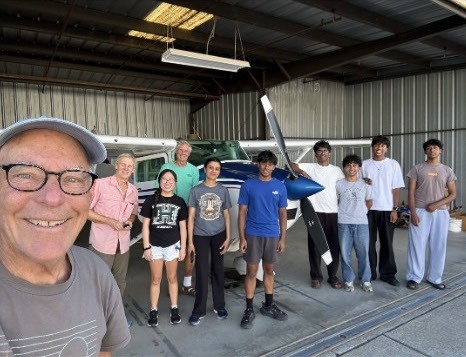
The standout case is the Open Science Data Repository project, where a cohort of high school students completed NASA's free Machine Learning for Space Biology course, then mined retinal data from the ISS Rodent Research-9 mission and trained an ML ensemble that distinguishes oxidative damage from cell death in space-flown mice. The result was published in npj Microgravity with every student listed as co-author. Several started college this fall with a NASA publication on their CV. That is not volunteerism — that is pipeline development for the next generation of space biology researchers. The Ozone Where We Live (OWWL) project paired high school students in California's Tri-Valley region with mentors from the Quest Science Center to run a month-long field campaign: 12 science flights and ground-based sensors at participants' homes, measuring air quality from the Bay Area into the San Joaquin Valley. The Chesapeake Water Watch project crossed 6,000 observations from volunteers monitoring the nation's largest estuary since 2021. Snapshot Wisconsin has had volunteer Tim Sparks maintaining trail cameras, snow depth sensors, temperature loggers, and sound recorders for nearly a decade. Backyard Worlds: Planet 9 volunteers are writing their own Python tools to mine Pan-STARRS, WISE, SIMBAD, Gaia DR3, CatWISE, and NSC DR2 data. Volunteer Frank Kiwy shares these tools publicly. Others maintain discovery lists, lead Space Apps challenges, and teach new participants. This is an open-source astronomy community operating inside NASA's institutional framework. The model works because NASA provides the infrastructure — open data repositories, free courses, project coordination, institutional credibility for publication — while volunteers provide labor, local knowledge, and sometimes genuine technical innovation. The Space Cloud Watch project's volunteers built a Field Guide for new citizen scientists. The cost to NASA per unit of science output is extraordinarily low. The risk, unstated in the thank-you post, is the standard risk of volunteer labor: sustainability depends on intrinsic motivation, the pipeline is fragile if key volunteers leave, and the question of whether unpaid labor producing publishable science represents generosity or extraction depends on who captures the long-term value. When high schoolers get co-authorship on a journal paper, that is genuine value returned. When volunteers maintain equipment for a decade, the calculus is less clear. All open citizen science opportunities are listed at science.nasa.gov/citizen-science, and the barrier to entry ranges from submitting moon photos to training machine learning models on ISS data. The program demonstrates that distributed volunteer science can produce real outputs — but its long-term resilience depends on whether NASA continues to treat volunteers as collaborators rather than free labor.
Worth reading?
RECOMMENDED
Score
76
/100
Generative — NASA provides infrastructure, data, and credibility; volunteers provide labor and innovation; outputs include peer-reviewed publications, open-source tools, and career-launching co-authorships for students.
What Is GRIN?
GRIN stands for Generativity, Resilience, Innovation efficiency, and Novelty openness. These four dimensions capture the essential characteristics of any memetic intelligence — whether a nation, a corporation, a religion, or a movement.
About GRINGenerativity
4/5
Resilience
2/5
Efficiency
4/5
Novelty
5/5
Extractive
1/5
Inverted
Does this create new capability or just redistribute existing value?
Genuine capability creation. High schoolers publishing ML papers, volunteers building shared Python tools, field campaigns generating novel atmospheric data — new science that wouldn't exist otherwise.
Verified Facts (7)
High school students completed NASA's free Machine Learning for Space Biology course and trained an ML ensemble published in npj Microgravity
17 citizen science student co-authors named: Aditi Adapala, Mushtaq Ali, Naomi Z. Chang, Sophie Cai, Margaret Hitt, Anishka Jain, Matthew Lin, MarcAnthony Paolieri Della Monica, Elior Paley, Rudransh Pathak, Shawnak Samaddar, Shriya Sawant, Zhihan Shi, Rohin Sood, Fabian P. Uribe, Maxwell Volkan, and Jessica Wu
Chesapeake Water Watch crossed 6,000 observation milestone in 2024, project wrapping up
Tim Sparks has been a Snapshot Wisconsin volunteer for nearly 10 years
OWWL project ran 12 science flights and ground-based sensors over August with Quest Science Center students
Frank Kiwy shared Python tools mining Pan-STARRS, WISE, SIMBAD, Gaia DR3, CatWISE, and NSC DR2 data
All open opportunities listed at https://science.nasa.gov/citizen-science/
More latest news
Read all