FIRST SUPERSONIC
Mach 1+
OVERLAND BAN AGE
53 yrs
FLIGHT DATE
June 5
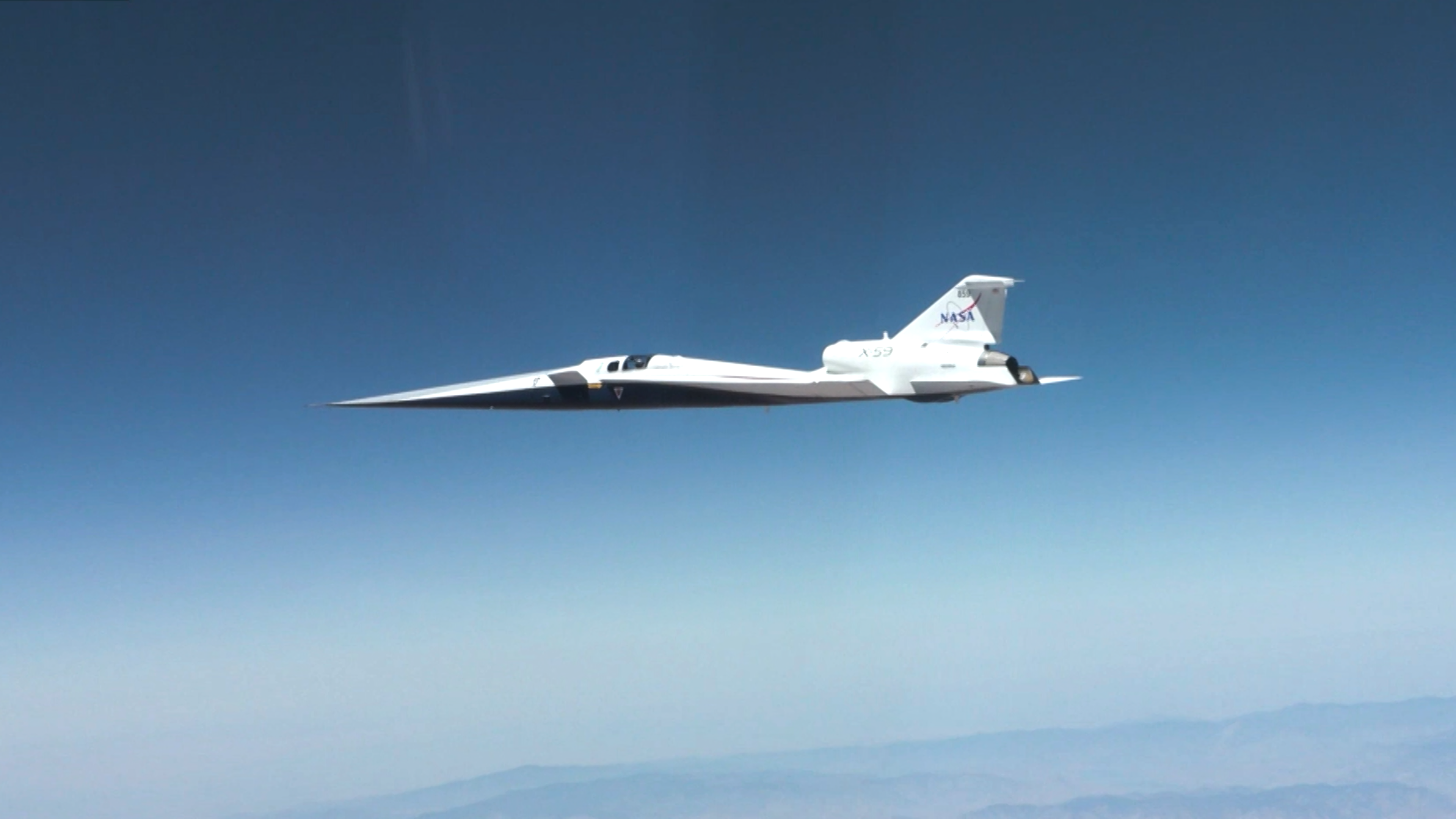
NASA's X-59 quiet supersonic research aircraft completed its first supersonic flight on Friday, June 5, 2026, marking the first time the aircraft exceeded the speed of sound in support of the agency's Quesst mission. The milestone represents a major step in flight testing as the X-59 expands into the supersonic portion of its flight envelope.
Extraction Map
The X-59 exists to answer one question: can you design a supersonic aircraft that produces a soft thump instead of a window-rattling sonic boom? The United States banned overland supersonic commercial flight in 1973. That ban has held for over five decades, not because the physics changed but because nobody built hardware that could challenge the regulatory premise. The X-59 is that hardware. The Quesst mission's real deliverable is not an airplane — it's a dataset. NASA intends to fly the X-59 over populated communities and measure public response to its shaped sonic signature. That acoustic perception data feeds directly into a potential FAA rulemaking that could replace the blanket ban with a noise-based standard. The aircraft is a regulatory instrument disguised as an engineering project. This is public R&D at its most structurally generative. NASA bears the development risk and produces open data. If the noise standard changes, the beneficiaries are every aerospace company that wants to build supersonic transports — Boom Supersonic, Lockheed Martin, and entrants that don't exist yet. The knowledge is non-rivalrous. The taxpayer funds the research; the industry captures the commercial upside, but the competitive field stays open. The efficiency question is real. Supersonic flight burns significantly more fuel per passenger-mile than subsonic. Any future commercial fleet faces a direct collision with decarbonization targets unless sustainable aviation fuels or next-generation propulsion close the gap. NASA's research unlocks capability without resolving the carbon cost. The twenty-year view matters. If the FAA lifts the overland ban based on Quesst data, the U.S. creates a first-mover regulatory framework that other nations will reference or adopt. That's soft infrastructure — the kind that compounds. If the data shows communities still reject the noise, the ban holds and the investment was still worthwhile as honest public science. The X-59's first supersonic flight is a milestone, not a destination. The flight testing campaign will expand through the supersonic envelope, followed by community overflight surveys. The aircraft just proved it can do the thing. Now it has to prove the thing is quiet enough.
Worth reading?
RECOMMENDED
Score
76
/100
Generative. Public money funds open research that could unlock an entire commercial aviation category for multiple competitors, with no proprietary lock-in on the data.
What Is GRIN?
GRIN stands for Generativity, Resilience, Innovation efficiency, and Novelty openness. These four dimensions capture the essential characteristics of any memetic intelligence — whether a nation, a corporation, a religion, or a movement.
About GRINGenerativity
4/5
Resilience
3/5
Efficiency
4/5
Novelty
4/5
Extractive
1/5
Inverted
Does this create new capability or just redistribute existing value?
Textbook generative R&D. NASA bears risk, produces open acoustic data, and any company can build on the resulting noise standard. Creates a market category, not a monopoly.
Verified Facts (3)
NASA's X-59 quiet supersonic research aircraft completed its first supersonic flight Friday, June 5, 2026
First time the aircraft exceeded the speed of sound in support of NASA's Quesst mission
The milestone represents a major step in flight testing as the aircraft expands into the supersonic portion of its flight envelope
More latest news
Read all