MIL-CONNECTED KIDS · TX
240K+
STATE RANK · NATION
#2
SCHOOLS PER CHILD
6-8
DEPLOYMENT CYCLE
9-12 mo
Brandon Enos, superintendent of Gunter ISD and chair of the Texas Rural Education Association Legislative Committee, writes from dual authority: he served active duty in the U.S. Army, watched his own children attend six to eight schools each before graduating, and now runs a public school district. His argument is structural, not sentimental — military-connected children face systemic friction that existing school infrastructure is not designed to handle.
Extraction Map
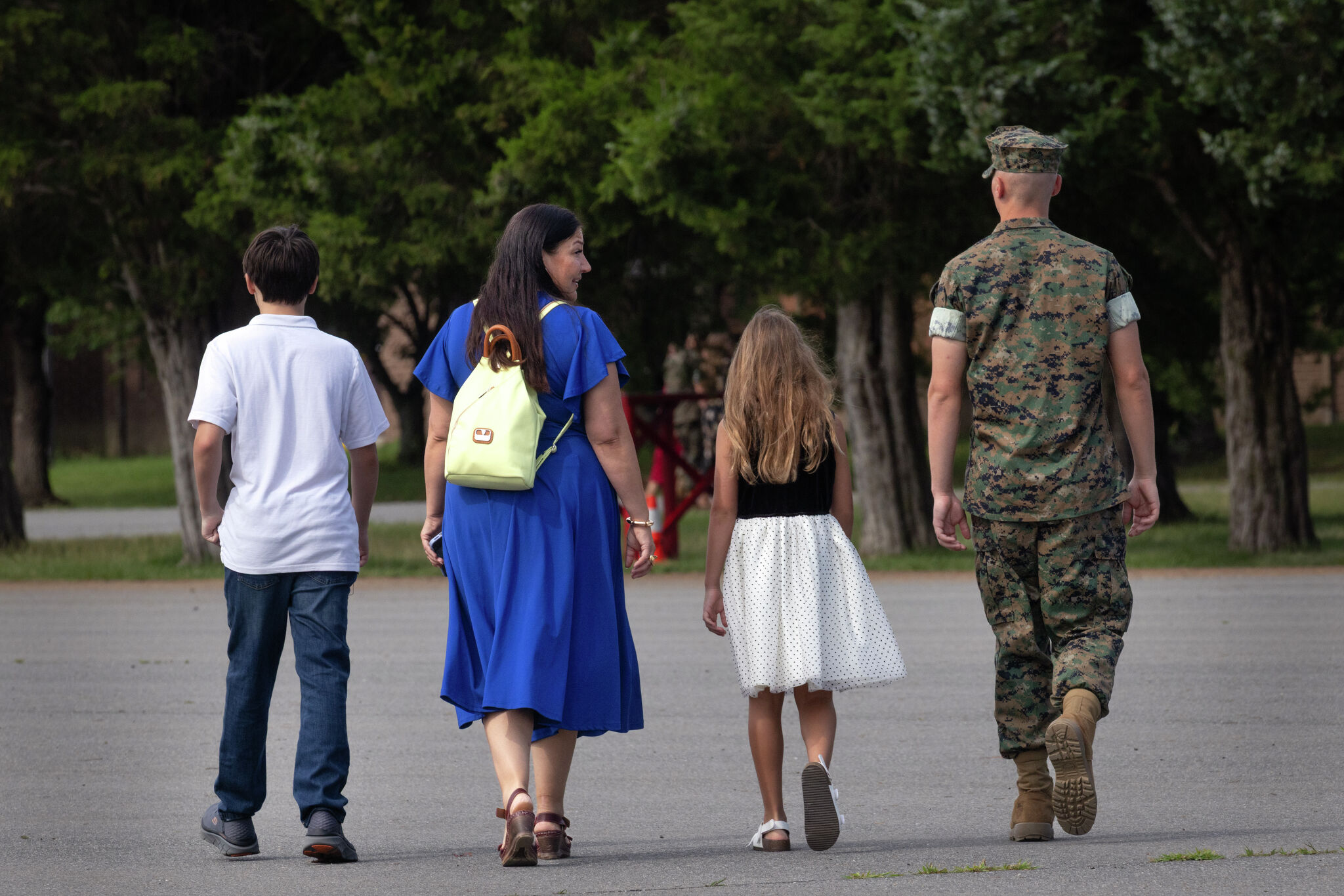
The numbers frame the scale. More than 240,000 military-connected children are enrolled in Texas public schools, the second-largest such population in any state. These students are dispersed statewide, not concentrated around bases, which means the problem touches every district whether it recognizes it or not. Course sequences differ wildly across states. Credits evaporate during transfers. High schoolers risk delayed graduation because local requirements conflict with the transcript they carried in. Beyond academics, the emotional load is real and measurable. Enos describes students sitting in algebra while carrying anxiety about a deployed parent, returning home to adult-sized household responsibilities, and absorbing the fatigue of perpetually being the new kid. Teachers untrained in recognizing deployment-related stress may misread a grade drop or behavioral shift as a discipline problem rather than a stress response. The proposed mechanism is the Texas Education Agency's Purple Star Campus Designation. It is not a funding program or a legislative mandate — it is a voluntary designation that commits a campus to specific supports: a dedicated military family liaison, accelerated enrollment and credit-transfer processes, peer-to-peer welcome programs, and specialized teacher training on deployment-related stress. Eno's challenge to fellow superintendents and trustees is direct: earn the Purple Star designation for every campus. The implicit argument is that the designation costs districts very little in dollars but requires intentional organizational effort — precisely the kind of low-cost, high-coordination intervention that tends to die from indifference rather than opposition. The op-ed also makes a national-security argument that rarely surfaces in education debates: when service members deploy, their operational focus depends on confidence that their children are not falling through cracks. A seamless school experience for military kids is, in this framing, a force-readiness issue as much as an education equity issue. The piece is advocacy, not analysis, and it does not address funding gaps, staffing constraints, or how many Texas campuses currently hold the designation versus how many could. But the core diagnosis — that 240,000 students face systemic friction that a low-cost voluntary program could reduce — is sound and specific enough to evaluate on its merits.
Worth reading?
RECOMMENDED
Score
60
/100
Mildly generative — the Purple Star designation builds coordination infrastructure at low cost, but remains voluntary with no enforcement mechanism or funding, limiting its systemic reach.
What Is GRIN?
GRIN stands for Generativity, Resilience, Innovation efficiency, and Novelty openness. These four dimensions capture the essential characteristics of any memetic intelligence — whether a nation, a corporation, a religion, or a movement.
About GRINGenerativity
3/5
Resilience
3/5
Efficiency
3/5
Novelty
2/5
Extractive
1/5
Inverted
Does this create new capability or just redistribute existing value?
Modest generative potential. Dedicated liaisons and credit-transfer protocols create real capability for mobile students, but voluntary adoption means impact depends entirely on local willingness.
Verified Facts (5)
More than 240,000 military-connected children are enrolled in Texas public schools, the second-largest population in the nation.
Each of my children attended six to eight different schools before crossing a high school graduation stage.
Brandon Enos is the superintendent of the Gunter Independent School District ISD and chair of the Texas Rural Education Association Legislative Committee.
Deployment periods described as nine to 12 months.
The Texas Education Agency's Purple Star Campus Designation provides a dedicated liaison, accelerated enrollment, smooth credit transfers, peer-to-peer welcome programs, and specialized teacher training.
More latest news
Read all