AIR FORCE CONTRACT
$37M
AUTONOMOUS GULF FLIGHT
1st
DEFENSE & COMMERCIAL PARTNERS
6+
AIRCRAFT GENERATION
V2
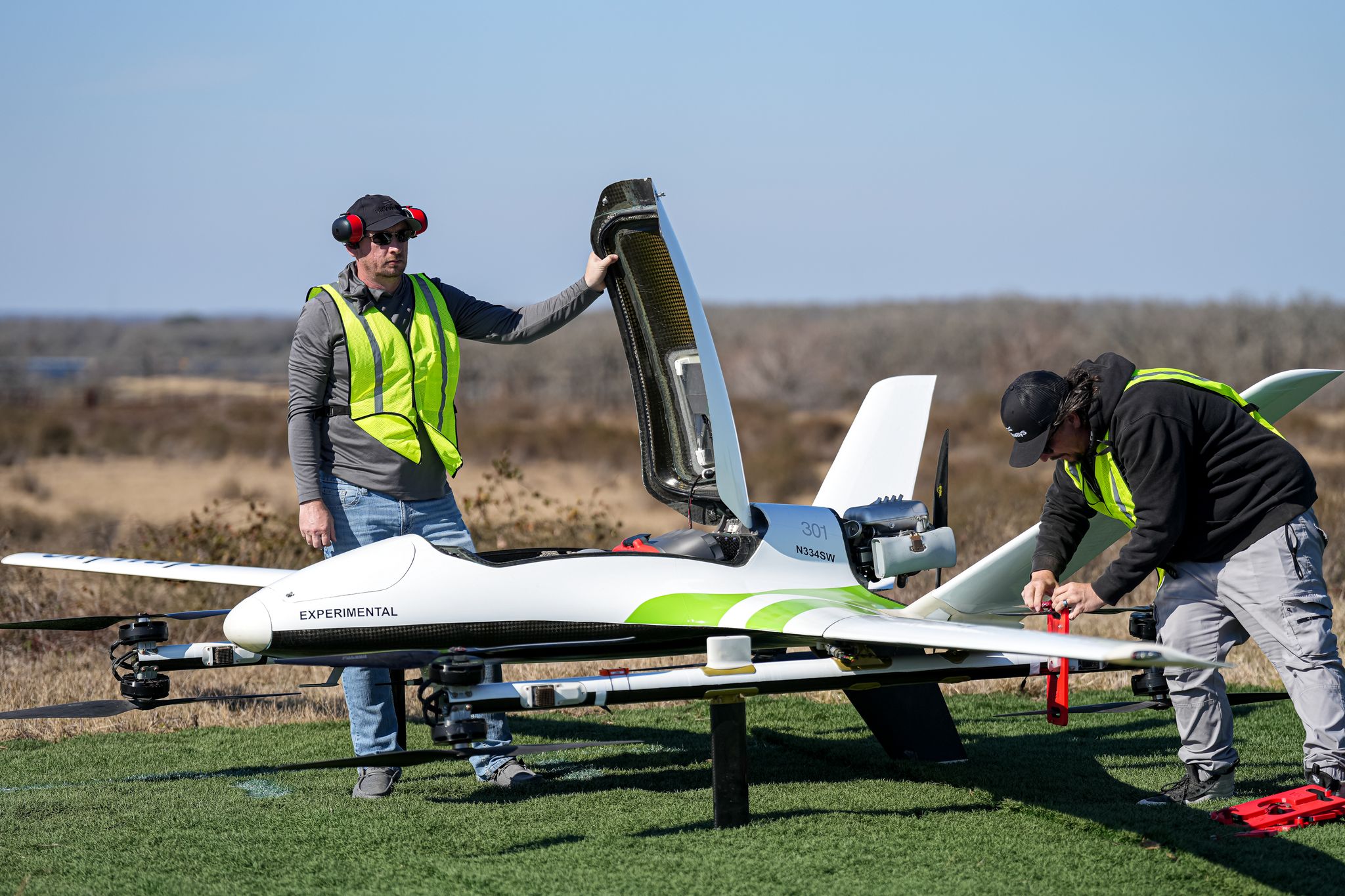
The FAA has authorized Austin-based Skyways Air Transportation Inc. to conduct the first autonomous long-range drone flight over the Gulf of Mexico. The mission will send a Skyways V2 aircraft from a Shell Pipeline Co. LP facility in Louisiana to an offshore platform, where it will inspect a pipeline and simulate an equipment delivery. It is a commercial first for autonomous long-range aircraft in the Gulf.
Extraction Map
Skyways is not a consumer drone company. Its aircraft resemble small airplanes with vertical takeoff and landing capability, designed for logistics rather than photography. The company has been testing these vehicles in Central Texas, near Giddings, and has already deployed them in defense contexts — ferrying mail and spare parts between Navy ships, tasks traditionally requiring helicopters. The defense pedigree is substantial. Skyways holds a $37 million Air Force contract to support V3 production, described as one of the largest contracts with an autonomous drone company. Additional partnerships span the U.S. Navy, the Japanese Ministry of Defense, DSV, Skyports Drone Services, and All Nippon Airways. The Gulf mission represents a pivot toward commercial industrial applications. The Shell collaboration is the key signal. Offshore oil and gas infrastructure is a natural beachhead for autonomous logistics — remote platforms, expensive helicopter hours, dangerous conditions, and routine inspection needs. If the pipeline inspection and simulated delivery succeed, the economics of offshore resupply could shift meaningfully. Helicopter charter costs for Gulf platforms run tens of thousands of dollars per sortie. Acting FAA Deputy Administrator Liam McKenna framed the authorization as the product of "extensive coordination" between Skyways, Shell, and the FAA, emphasizing safety frameworks for "novel operations." The regulatory language matters: this is not a blanket approval for autonomous Gulf flights, but a specific authorization that establishes precedent. How quickly the FAA moves from single-mission approvals to broader operating certificates will determine whether this becomes a real industry or stays in demonstration mode. CEO and cofounder Charles Acknin called the authorization an expansion of Skyways' "operating envelope" in the U.S. The company's strategy is visible: build credibility through defense contracts, demonstrate capability through high-profile civilian missions, and use the regulatory track record to unlock commercial scale. The defense-to-commercial pipeline is well-worn in aerospace, and Skyways appears to be executing it deliberately. The 20-year question is whether companies like Skyways build a genuinely new logistics layer for offshore and remote operations, or whether incumbents — major defense contractors and helicopter operators — absorb the technology and the margins. For now, the generative potential is real but early-stage, and the value creation depends on regulatory follow-through as much as on the aircraft themselves.
Worth reading?
RECOMMENDED
Score
68
/100
Generative. New capability is being created — autonomous long-range offshore logistics — that did not previously exist in commercial form, with potential to reduce costs and risk for offshore operations.
What Is GRIN?
GRIN stands for Generativity, Resilience, Innovation efficiency, and Novelty openness. These four dimensions capture the essential characteristics of any memetic intelligence — whether a nation, a corporation, a religion, or a movement.
About GRINGenerativity
4/5
Resilience
3/5
Efficiency
3/5
Novelty
3/5
Extractive
1/5
Inverted
Does this create new capability or just redistribute existing value?
Genuinely new capability. Autonomous VTOL logistics for offshore platforms replaces expensive helicopter sorties with a cheaper, scalable alternative. Still pre-commercial, but the defense-to-civilian pipeline is real.
Verified Facts (6)
The Federal Aviation Administration has authorized Skyways Air Transportation Inc. to conduct an autonomous long-range flight from the U.S. coastline to offshore infrastructure.
The company secured a $37 million contract from the Air Force to aid in its V3 production, one of the largest contracts with an autonomous drone company.
Skyways also has partnerships with the U.S. Navy, Japanese Ministry of Defense, DSV, Skyports Drone Services and All Nippon Airways.
One of Skyways' V2 aircraft will take off from a Louisiana facility of Shell Pipeline Co. LP and fly to an offshore platform in the Gulf.
The autonomous drone will inspect a pipeline and simulate a delivery of equipment to the platform.
Acting FAA Deputy Administrator Liam McKenna said the authorization follows extensive coordination among Skyways, Shell and the FAA.
More latest news
Read all