STARTUP COST
$2K
CUSTOMERS / WEEK
50-75
REGULATORY STEPS
105
RENT SINCE 2019
+24%
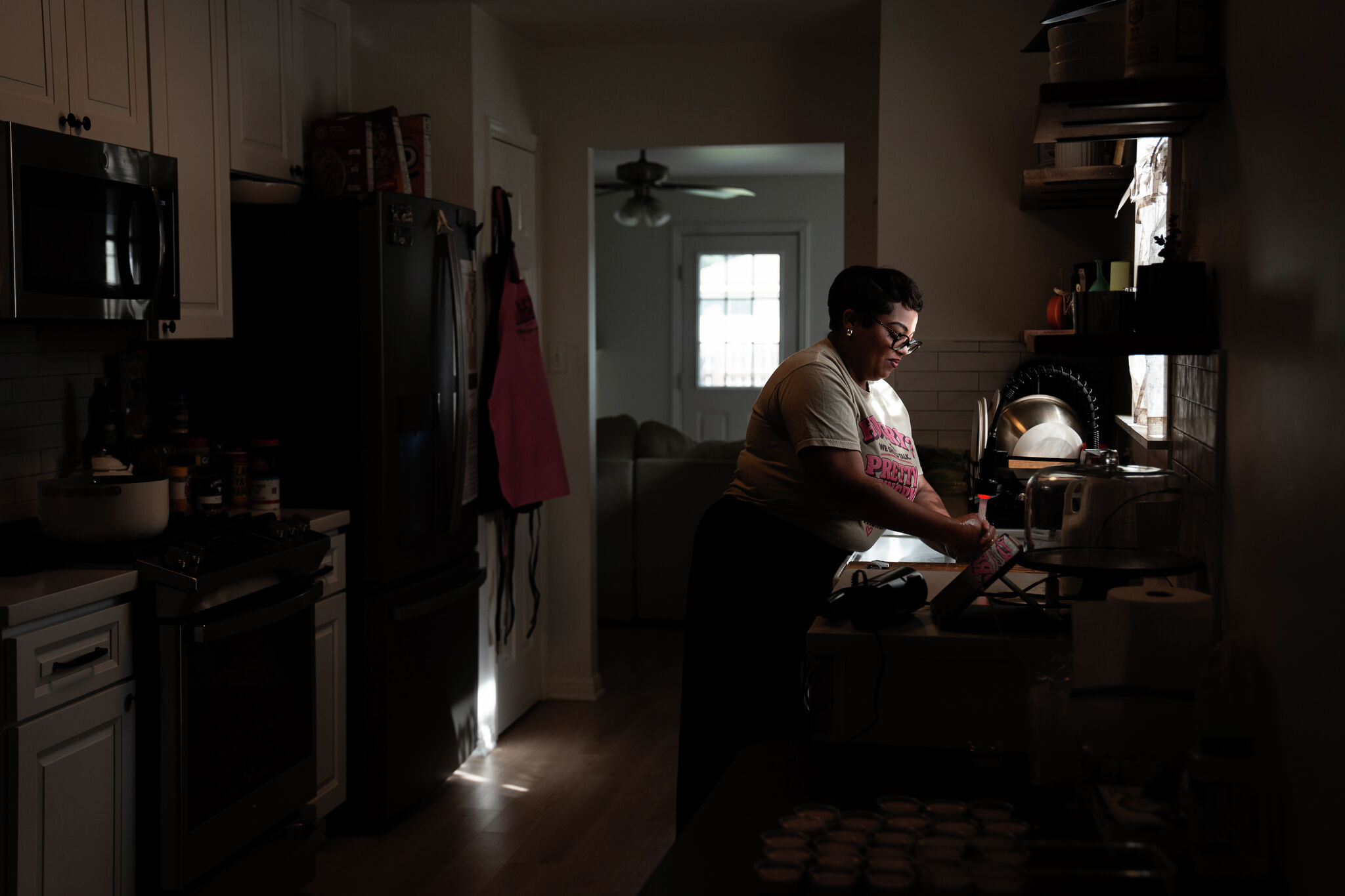
Queen Lockhart launched Pretty Hungry ATX on September 2, 2026, with $2,000, two days of branding work, and a TikTok account. Within weeks she was serving 50 to 75 customers per week from her Round Rock home kitchen, selling $22 wing platters through Square preorders and handing them off in a neighborhood pool parking lot. The business exists in the gap between a hobby and a restaurant — commercially viable in demand, structurally trapped in supply.
Extraction Map
The trap is specific and measurable. Lockhart cannot buy ingredients in bulk because her home lacks commercial-grade refrigeration and storage, which raises her per-unit food costs and compresses margins. She estimates she earns $20 to $23 an hour for her cooking labor. Moving to a commercial kitchen would push her platter price to $25 or $26, a jump some customers already resistant to $22 would reject. Meanwhile, lenders quoted her $50,000 for a restaurant and $20,000 to $30,000 for a food truck — capital she cannot access because lenders require established cash flow and credit history from a business that is three months old. The cost environment has shifted against small food operators across the board. Austin-area retail asking rents rose 24% from $21.59 per square foot in mid-2019 to $26.87 in Q3 2026, adding roughly $660 per month to base rent on a 1,500-square-foot space. The bank prime rate sits at 7%, more than double the 3.25% of 2021. A 2025 Institute for Justice report counted 105 regulatory steps and $8,962 in permitting and licensing fees to open a small restaurant in Austin. The National Restaurant Association estimates average restaurant operating expenses rose 36% between 2019 and 2026. Texas expanded its cottage food law in 2025, raising the gross-sales threshold from $50,000 to $150,000 and allowing more temperature-controlled foods. But Senate Bill 541, effective September 1, 2025, still excludes meat, poultry, and seafood — which means Lockhart's chicken wing platters cannot legally operate under the cottage food exemption. She holds a food manager certification and an LLC, but acknowledges her current setup presents regulatory concerns. The law creates a clear boundary: you can scale a home bakery to $150,000 in revenue, but a home cook selling prepared chicken hits a legal wall well before that. Shared commercial kitchens offer a middle path, but costs add up fast. Moonbeam Kitchen in East Austin advertises 20 hours for $400 per month plus a $350 refundable deposit. Wingman Kitchens lists 20 hours for $500 with a three-month minimum. Lil' Mama's Kitchen in Round Rock starts at $30 an hour with a four-hour minimum and $500 deposit. Add insurance, permits, and storage, and the monthly overhead for part-time kitchen access approaches the cost of a lease without the benefit of permanent space. Lockhart's story is a clean illustration of how the regulatory and capital structure around food service creates a dead zone. Social media has collapsed the demand-side barrier to entry — a 2026 Food Liability Insurance Program survey found 34% of cottage food operators cited social media as a leading customer source. But the supply side remains gated by commercial real estate costs, lending requirements designed for established businesses, and food safety rules that treat home preparation of meat as fundamentally different from home preparation of baked goods. The result is a category of business that can prove demand but cannot legally or financially scale to meet it. Austin's 2024 regional Food Plan calls for expanding small-business development and capital access in the food industry, and the city partners with Kiva on interest-free loans up to $15,000. But Lockhart operates in Round Rock, which limits her eligibility for Austin-based coaching and support programs. Geography adds another friction layer to a business already squeezed between what customers want and what the system allows.
Worth reading?
SKIP
Score
32
/100
Extractive — incumbent cost structures (commercial rents, lending requirements, 105-step permitting) and legal exclusions (meat ban in cottage food law) extract value from micro-entrepreneurs who have demonstrated demand but cannot access the capital or regulatory pathway to meet it.
What Is GRIN?
GRIN stands for Generativity, Resilience, Innovation efficiency, and Novelty openness. These four dimensions capture the essential characteristics of any memetic intelligence — whether a nation, a corporation, a religion, or a movement.
About GRINGenerativity
3/5
Resilience
1/5
Efficiency
1/5
Novelty
2/5
Extractive
4/5
Inverted
Does this create new capability or just redistribute existing value?
Real demand creation from nothing — 75 customers/week on $2,000 — but generativity is capped by law and capital access. The business proves the model works; the system prevents it from compounding.
Verified Facts (14)
Lockhart launched Pretty Hungry ATX on September 2 with about $2,000.
She estimates she serves 50 to 75 customers a week.
She charges $22 for a platter of eight wings, two sides and cornbread.
Austin-area retail asking rents rose from $21.59 per square foot annually in mid-2019 to $26.87 in Q3 2026.
The bank prime rate was 7% in November, compared with 3.25% in 2021.
A 2025 Institute for Justice report estimated 105 regulatory steps and $8,962 in permitting and licensing fees to open a small restaurant in Austin.
Texas SB 541 took effect September 1, 2025, excluding meat, poultry and seafood from the cottage food exemption.
The 2025 law raised the annual gross-sales threshold from $50,000 to $150,000.
National Restaurant Association estimates operating expenses rose 36% between 2019 and 2026.
Moonbeam Kitchen advertises 20 hours for $400/month plus $350 refundable deposit.
Wingman Kitchens lists 20 hours for $500 with a three-month minimum.
A 2026 FLIP survey found 34% of cottage food operators cited social media as a leading customer source.
Lockhart estimates she earns about $20 to $23 an hour for her cooking labor.
Lenders quoted about $50,000 for a restaurant and $20,000 to $30,000 for a food truck.
More latest news
Read all