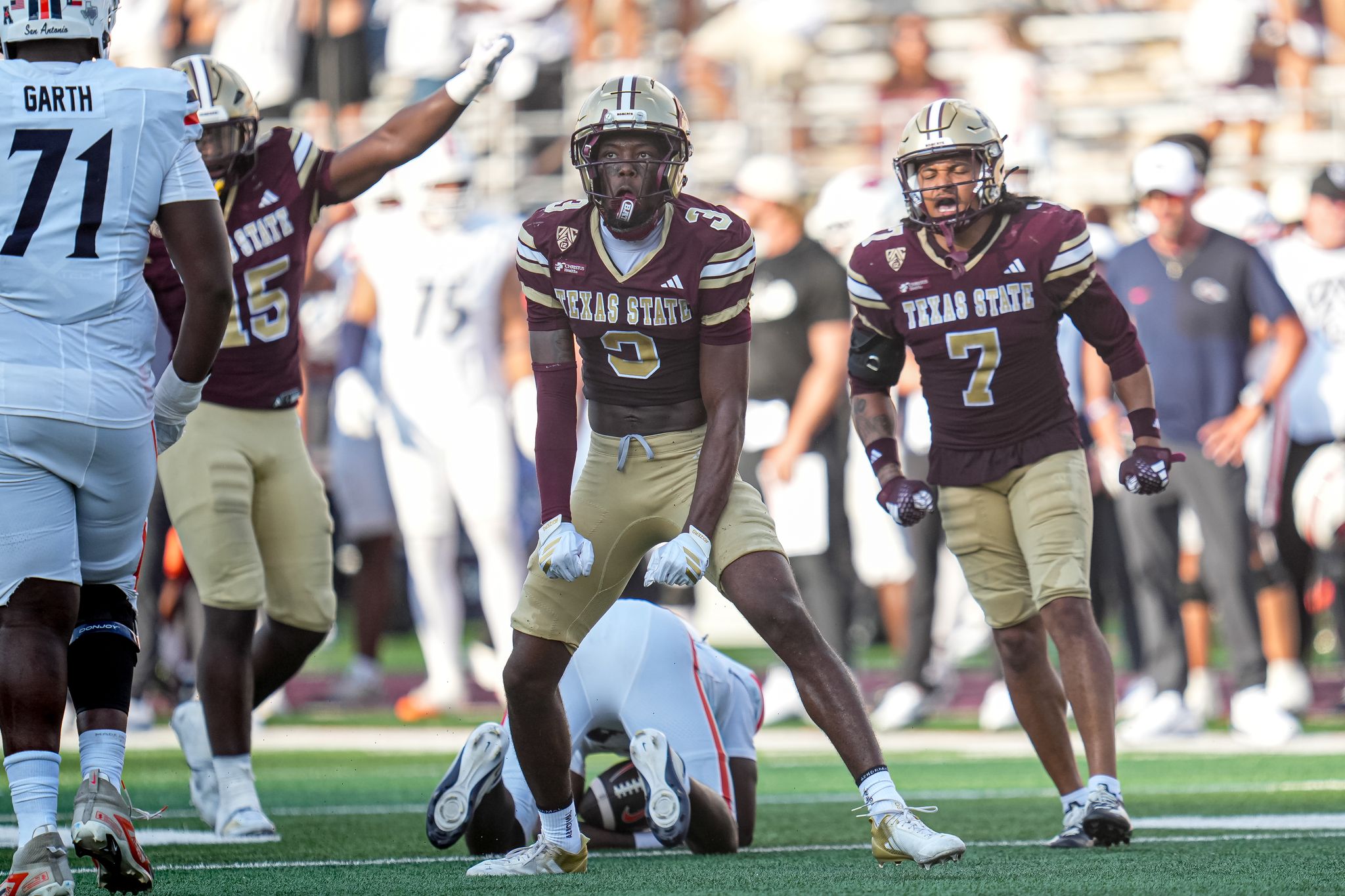
Like the best process-over-outcome sports journalism — think Zach Lowe's old Grantland columns or the early-era Football Outsiders dispatches — this piece asks readers to distrust the most visible number on the scoreboard and instead look at the trajectory underneath. Caleb Yum's argument isn't flashy, but it's structurally sound: a 59-7 blowout loss to Texas is an outlier warping the season average, the secondary returned one full-time starter and needed live reps to build trust, and the game-by-game arc shows a unit tightening from 30-plus allowed to 10, 27, and 17 across the middle of the season. The piece's strongest move is its specificity about San Diego State. That game looks like 31 points allowed until you learn only two were offensive touchdowns — the rest came from a kickoff return, a pick-six, and a safety. This is the kind of granular correction that earns trust. Most beat reporters would cite the headline number and move on. Yum breaks the box score apart. Defensive coordinator Will Windham, in his first year calling Texas State's defense, gets good quotes here. His line about being 'occasionally great' meaning you're 'occasionally a dumpster fire' is the piece's thesis in eight words. The emphasis on consistency over flash is a coaching cliché, but the article earns it by showing the actual scoring progression game by game. Jayden Bradley's arc — from raw athlete who started his career against the Longhorns to PFF's top-graded defender in the Oregon State win with back-to-back interceptions — gives the piece a human throughline. It's the individual proof of the systemic argument: young players in a new scheme need reps, and these reps are paying off. The piece is honest about the lapses, too. First halves against North Texas and Boise State. The UTSA late-game collapse on two fourth downs. Windham's own dissatisfaction with late touchdowns in a 42-21 blowout win. This isn't boosterism — it's a reporter with access showing his work. Where the piece falls short is in providing the kind of advanced defensive metrics that would make the argument airtight. Yards per play against Utah State (4.1) gets a mention, but EPA, success rate, or DVOA would have locked it down. The argument is persuasive but built mostly on game-by-game scoring and coach-speak rather than the analytical vocabulary that would make it bulletproof. Still, as a local beat piece doing the unsexy work of explaining why the obvious number is wrong, this delivers. The forward-looking frame — Fresno State's defense allows 20.6 points and the Bobcats' offense may struggle — sets up the next chapter cleanly. Windham's closing quote about wins and losses being the only stat that matters is a perfect full-circle beat-reporter ending.
Worth reading?
OPTIONAL
Score
32
/100
Texas State football fans who want to understand why the defense feels better than 30.8 PPG, or Pac-12 followers tracking the Bobcats' championship-game case.
Cultural Placement
Like the Football Outsiders tradition of 'the number you see is lying to you' applied at the local beat level, with the access and coach quotes of a Dane Brugler prospect breakdown but without the advanced metrics. Think of Zach Lowe's mid-career Grantland work — close observation of process, distrust of surface stats — compressed to 900 words and aimed at a San Marcos readership. The piece sits in the lineage of smart contextual sports writing that trusts the reader to follow a counterintuitive argument, but it stops short of the analytical toolkit that would make it truly rigorous.
Honest assessment
A solid beat piece that does the useful work of breaking down a misleading headline stat. It's honest about the defense's lapses and specific enough about the San Diego State game to earn its thesis. But it lacks the advanced metrics that would make the argument conclusive, and the voice doesn't distinguish itself from the form.
What Is NOVEL?
32
/ 100
BedrockNews applies a structured analytical framework called NOVEL to cultural works — games, books, film, music, and more.
How NOVEL worksNerve
1/5
Originality
2/5
Voice
2/5
Endurance
1/5
Lineage
2/5
What did the artist risk? What could have failed?
Zero career risk. This is a beat reporter doing competent beat work — arguing the defense is better than it looks. The form is safe, the thesis is modest, the stakes are a Tuesday column.
Verified Facts (12)
Opponents are scoring 30.8 points per game, up from 29.0 points last season
59-7 loss to Texas
Last season, Texas State lost 34-15 to Arizona State
San Diego State scored 31 Oct. 3 against Texas State; only two offensive touchdowns
Utah State game: 20-17 win, 4.1 yards per play allowed
Jayden Bradley: 6-foot-1, 209-pound redshirt freshman
Bradley intercepted a pass in the last two games
PFF graded Bradley as best defensive player in Texas State's win over Oregon State
Oregon State final: 42-21
North Texas: 49-35 win; Tayven Jackson third in country in passing yards, seventh in passing touchdowns
Fresno State allowing 20.6 points, tied for best in Pac-12
Next game: 3 p.m. Saturday vs Fresno State, on CW
More latest news
Read all