SEATS IN RUNOFF
3
MEDIAN RENT DROP
$250
VOTES · AISD GAP
110
SAVED · NO RUNOFF
$350K
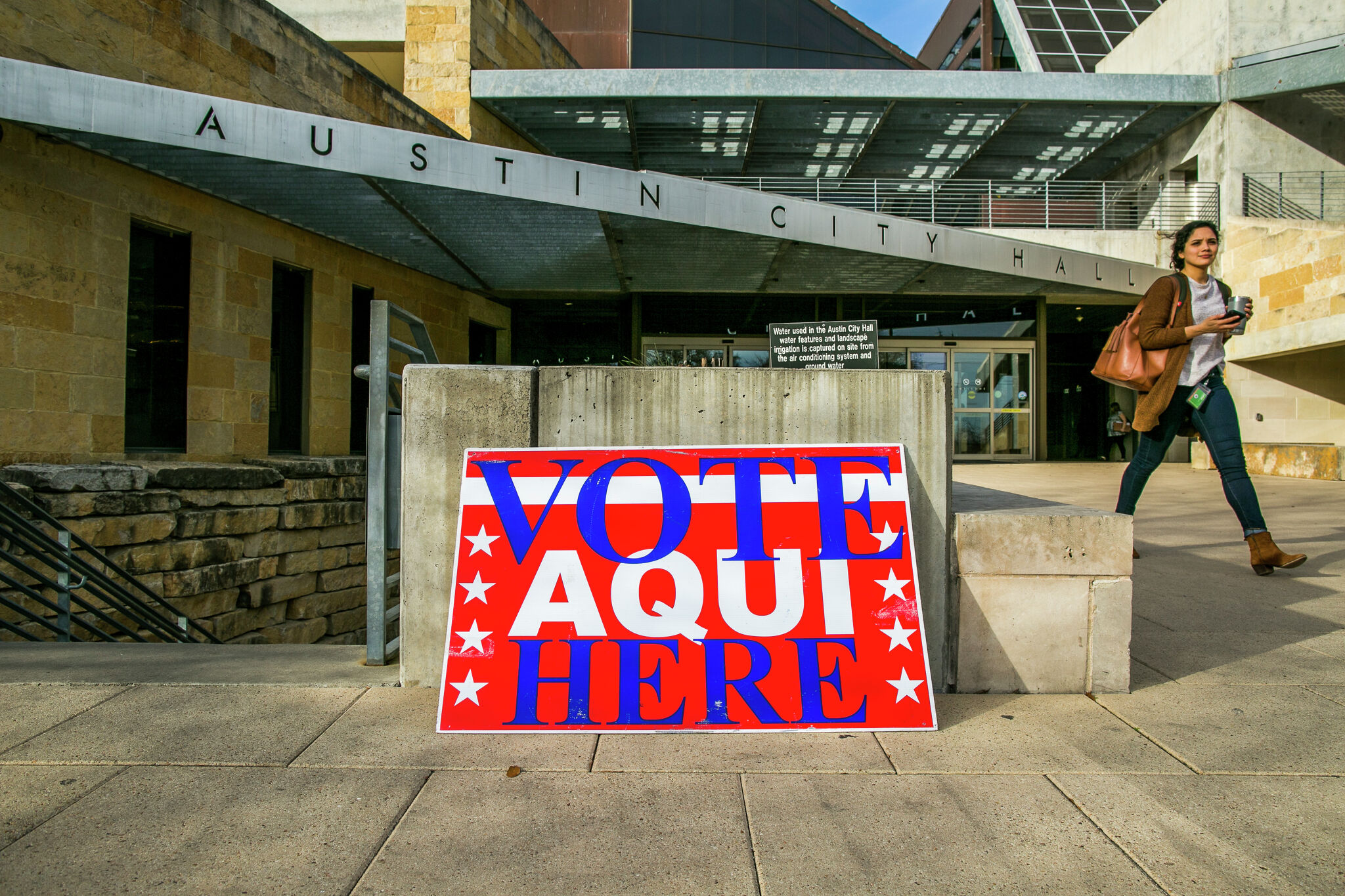
Austin's 2026 election season isn't done. Three City Council seats went unresolved on Nov. 3, triggering a Dec. 12 runoff that will shape housing, public safety, and spending policy for the city's million-plus residents. Early voting runs Monday through Dec. 8. The structural problem: December runoffs routinely draw a fraction of general-election turnout, handing outsize power to the small slice of voters who show up.
Extraction Map
In District 1, the Statesman endorsed Amber Goodwin over Democratic Socialist Misael Ramos. Goodwin, a former Travis County prosecutor and founder of gun violence prevention nonprofit Community Justice, is running on public safety and an economic development fund for small businesses in Northeast Austin — a district that, in her words, "feels like they've been left behind." The editorial board's original pick, Alexandria Anderson, didn't make the runoff. District 3 incumbent José Velásquez earned the paper's nod for a second term against tech entrepreneur Neha Shah. Velásquez's first term centered on affordability: directing property tax revenue from new development toward affordable housing in East Austin's homestead preservation district, simplifying food truck inspections, and connecting residents with legal resources amid stepped-up immigration enforcement. The board flagged a need for earlier community outreach on major projects. District 5 incumbent Ryan Alter got the endorsement over political consultant David Weinberg, largely on the strength of housing policy. Alter helped advance the HOME initiatives that contributed to a measurable result: a Pew report found Austin's median rent fell $250 as thousands of new units came online. The board acknowledged missteps — Alter used city funds for solo meals and a Texas Bar lifetime membership fee before repaying them — but judged the first-term record net positive. A fourth race quietly resolved itself. The Austin ISD at-large runoff between Pamela Mathai and Cynthia Soliz — separated by just 110 votes — was canceled when Soliz dropped out, saving the cash-strapped district an estimated $350,000 in runoff costs. That decision, the board noted, was itself an act of leadership. The endorsements follow a familiar local-newspaper pattern: favor incumbents with records, reward pragmatism over ideology, and privilege criminal justice and housing experience. The underlying structural story is about who governs when most people don't vote. December runoffs are a known democratic friction point — seats decided by thin slivers of an already-small electorate, giving organized blocs (party activists, neighborhood associations, public employee unions) leverage far beyond their numbers. Nothing in this cycle is radical. The endorsed candidates are center-left incrementalists working within Austin's existing policy framework. The real question is whether the runoff format itself — low turnout, high incumbent advantage, negligible media attention — produces governance that reflects the city or just the voters who bother to show up on a Tuesday in December.
Worth reading?
OPTIONAL
Score
48
/100
Mildly generative — housing and affordability policies have measurable outcomes (rent declines, affordable housing zones), but the runoff structure itself is extractive of democratic legitimacy, concentrating decision-making power in a narrow electorate.
What Is GRIN?
GRIN stands for Generativity, Resilience, Innovation efficiency, and Novelty openness. These four dimensions capture the essential characteristics of any memetic intelligence — whether a nation, a corporation, a religion, or a movement.
About GRINGenerativity
3/5
Resilience
2/5
Efficiency
2/5
Novelty
2/5
Extractive
2/5
Inverted
Does this create new capability or just redistribute existing value?
Modest generative signal. HOME initiatives and affordable housing zones produced real output — $250 median rent decline, new units built. But endorsements favor continuity over new capacity creation.
Verified Facts (10)
Early voting begins Monday [Dec. 1] through Dec. 8; Election Day is Dec. 12
Amber Goodwin is a former Travis County prosecutor and founder of gun violence prevention nonprofit Community Justice
Misael Ramos is a Democratic Socialist, community organizer and former chair of the Blackland Community Development Corporation
José Velásquez pushed to direct more property tax revenue from new development toward affordable housing in East Austin's homestead preservation district
Ryan Alter helped advance the HOME initiatives
A Pew report found Austin's median rent fell $250 as thousands of units were built
Alter used city funds for solo meals and his lifetime membership fee to the Texas Bar, expenses he repaid last year
Pamela Mathai and Cynthia Soliz finished just 110 votes apart in the Nov. 3 election
Soliz's withdrawal spared the district the roughly $350,000 cost of a runoff
The Statesman's original District 1 pick, Alexandria Anderson, did not make the runoff
More latest news
Read all