INFLATION GAP / BIENNIUM
$24B
BELOW NAT'L AVG / STUDENT
$4,000
STUDENTS LOST · 2025-26
76,000
BASIC ALLOTMENT / STUDENT
$6,215
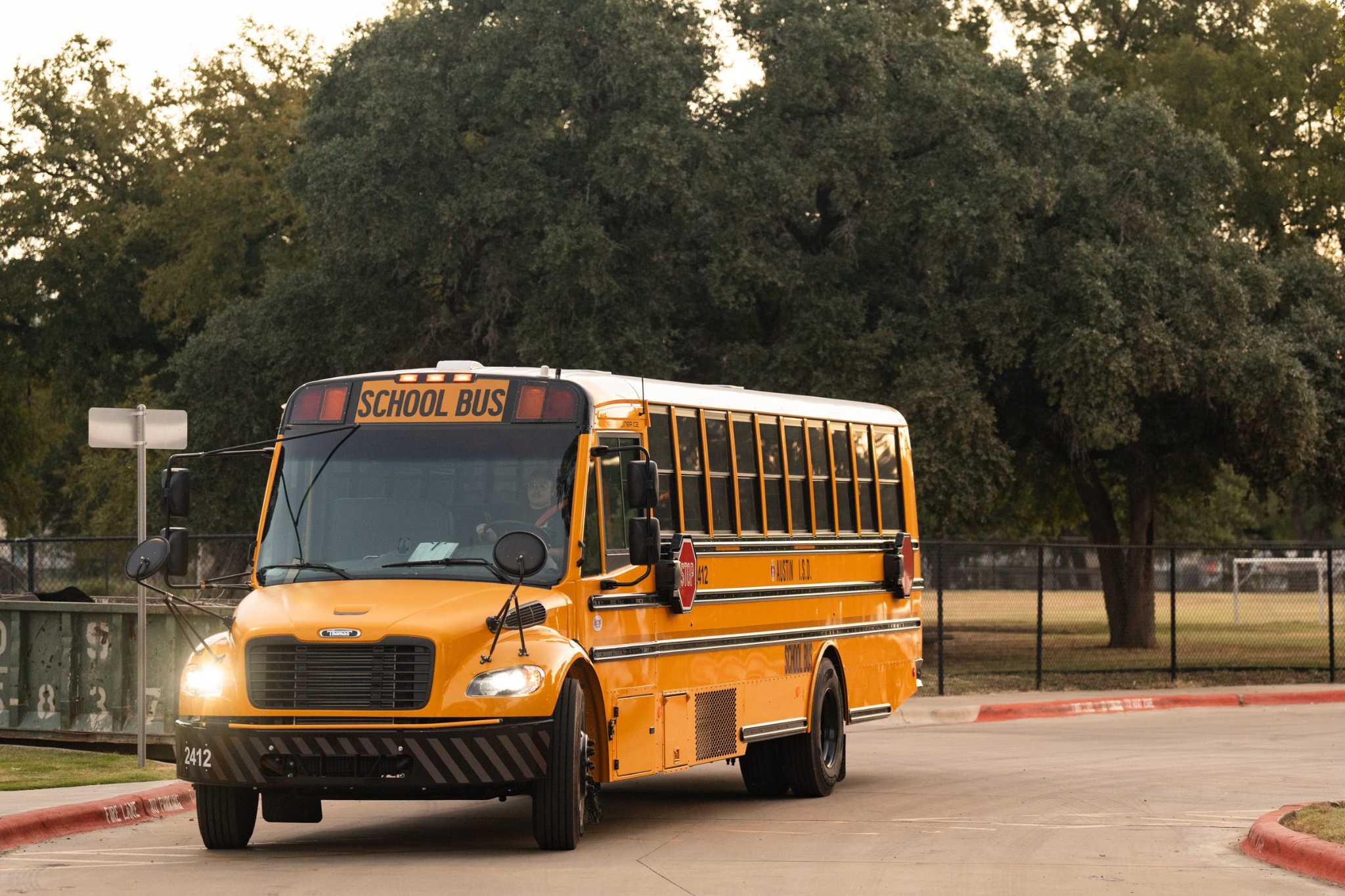
Austin ISD's summer budget fight — hours of debate over 11.5 librarian positions worth $1 million against a $181 million deficit — is the micro-portrait of a statewide crisis. The district balanced its books only by cutting staff, increasing class sizes, and closing 11 campuses. It is not alone.
Extraction Map
Across Texas, school districts are contracting. Judson ISD in San Antonio cut 500 positions and closed four schools. Pflugerville ISD shuttered four schools over a $15.6 million shortfall. Houston, Fort Bend, and Spring districts followed suit. The common drivers: costs that keep climbing (insurance, utilities, diesel for buses) and enrollment that keeps falling — 76,000 students lost statewide last year, the second-largest year-over-year decline in 40 years outside the pandemic. The state's existing funding architecture makes this worse. Texas funds schools based on attendance, not enrollment, meaning every absent student costs the district money even though the fixed costs of serving enrolled students remain. The basic allotment sits at $6,215 per student. As of 2022-23, Texas spent roughly $4,000 less per student than the national average, according to the Education Law Center. The November 2026 election shifted the political landscape. Democrats swept statewide offices and won a Texas House majority. Governor-elect Gina Hinojosa — a former Austin ISD trustee and state representative — has named school funding a priority and previously advocated for enrollment-based funding. Lawmakers approved $8.5 billion for public schools in 2025, but most of that went to teacher pay and did little to relieve district operating pressure. The math is daunting. Chandra Villanueva of Every Texan estimates it would take roughly $1,000 per student — about $24 billion per biennium — just to offset inflationary pressures accumulated since 2019. That number dwarfs what a single session is likely to deliver, regardless of party control. The state comptroller's revenue estimates, expected late 2026 or early 2027, will set the ceiling. Hinojosa has potential funding levers. Operation Lone Star, Greg Abbott's $11 billion border enforcement program, is one target — especially with the federal government approving $7.5 billion in reimbursements. Money that might have expanded the private school voucher program Abbott championed could also be redirected. But education will compete with healthcare, infrastructure, and other Democratic priorities for whatever revenue is available. The structural picture is clear: Texas built a school finance system calibrated for growth-era assumptions — rising enrollment, stable costs, attendance-based funding. All three assumptions have inverted. A one-session funding boost can ease immediate pain, but without structural reform to the allotment formula and the attendance-vs-enrollment question, districts will return to the same deficit cycle within two to four years.
Worth reading?
SKIP
Score
28
/100
Extractive — the state's funding formula systematically underpays districts relative to costs, forcing local communities to absorb the gap through staff cuts, school closures, and larger class sizes.
What Is GRIN?
GRIN stands for Generativity, Resilience, Innovation efficiency, and Novelty openness. These four dimensions capture the essential characteristics of any memetic intelligence — whether a nation, a corporation, a religion, or a movement.
About GRINGenerativity
1/5
Resilience
1/5
Efficiency
1/5
Novelty
3/5
Extractive
4/5
Inverted
Does this create new capability or just redistribute existing value?
Minimal new capacity created. Proposed increases backfill inflation losses rather than expand educational capability. Even best-case scenarios leave Texas $4,000/student below national average.
Verified Facts (12)
Austin ISD faced a $181 million deficit ahead of the 2026-27 school year
AISD closed 11 campuses to balance its budget
Lawmakers approved $8.5 billion in public school funding in 2025
Texas spends about $4,000 less per student on public education than the national average, per the Education Law Center's 2025 report
Texas public schools lost 76,000 students last year, the second-largest year-over-year enrollment decline in 40 years excluding the pandemic
Judson ISD in San Antonio cut 500 positions and closed four schools
Pflugerville ISD closed four schools over a $15.6 million budget shortfall
The basic allotment is currently $6,215 per student
Operation Lone Star cost $11 billion; DHS approved reimbursing Texas $7.5 billion
It would take about $1,000 per student — or $24 billion statewide per biennium — to offset inflationary pressures since 2019, per Every Texan
The legislative session begins Jan. 12
Gov.-elect Gina Hinojosa is a former Austin ISD trustee and state representative from Austin
More latest news
Read all