NVIDIA Q3 REV
$115.84B
MARKET EXPECTATION
$109.08B
DAYS · SUMMIT
2
APOLLO → AUSTIN
2nd HQ
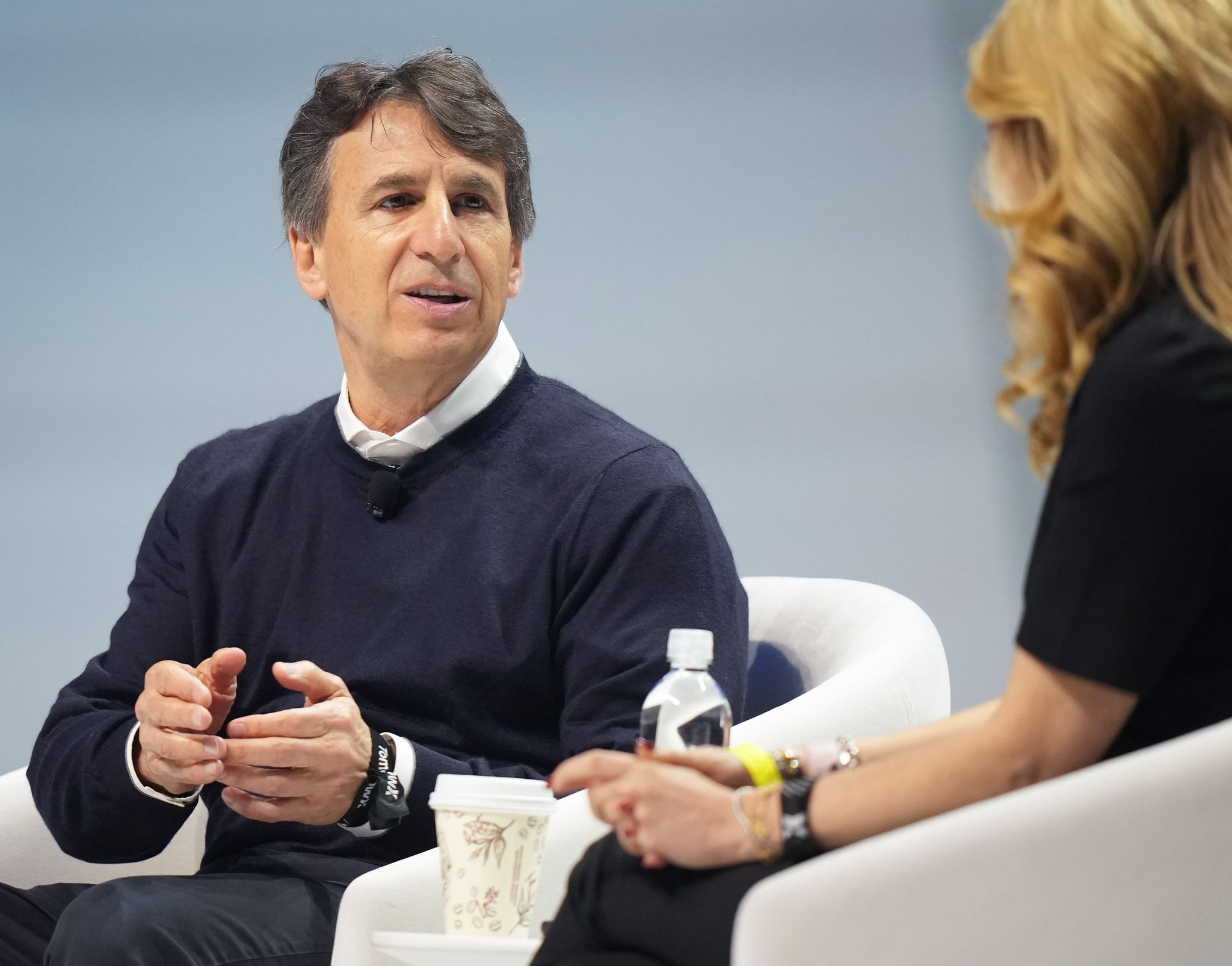
Austin's TomorrowX Summit convened technology CEOs, Wall Street investors, and venture capitalists at the Moody Center this week for a two-day conversation dominated by artificial intelligence — and by the political question hanging over Texas after Democrats swept statewide offices and took the Texas House in the midterms. The consensus from the stage: capital doesn't care about party color, only about whether you're hostile to it.
Extraction Map
Marc Rowan, co-founder and CEO of Apollo Global Management, framed it cleanly: "Blue, red. There's sensible and there's not sensible." Apollo announced its second headquarters in Austin earlier this year, and Rowan said the decision was driven by talent access as much as tax policy. "Capital ultimately goes where it is welcome," he said. The subtext: Texas Democrats haven't signaled hostility to business yet, so the money stays. Michael Dell used his hometown stage to announce he and COO Jeff Clarke are "building a fleet of agents that help us run the company" — AI tools embedded in Dell Technologies' operational decision-making. Dell acknowledged the workforce anxiety around AI but dismissed the idea that efficiency gains would simply eliminate jobs without creating new ones: "The idea that we would just do the existing things more efficiently and never do any new things is completely ridiculous." His framing — "It is the worst it'll ever be, it's only going to get better" — is the standard tech-optimist line, but it landed in a room full of people who are placing nine- and ten-figure bets on that being true. The sharpest moment came from AMD CEO Lisa Su, who addressed Jensen Huang's exit from Nvidia following reports of extramarital affairs, including one with a woman U.S. intelligence officials suspected of working with Chinese intelligence. Su — who is Huang's cousin — handled it with controlled diplomacy: "Nvidia is a phenomenal company. Jensen has been a tremendous leader for the industry ... we have to separate a little bit from the noise." Hours later, Nvidia reported Q3 revenue of $115.84 billion, beating market expectations of $109.08 billion, as if to punctuate her point that the company's fundamentals haven't collapsed with its founder's reputation. The speaker roster tells you where gravity is shifting. SpaceX CFO Bret Johnsen, Meta President Dina Powell McCormick, Goldman Sachs' David Solomon, and Boring Company President Steve Davis all took the stage. Austin-based Saronic, an autonomous maritime vessel maker, also featured. This isn't a local tech meetup — it's a signal that Austin has become a node where defense tech, AI infrastructure, and Wall Street capital converge. What TomorrowX didn't address is more revealing than what it did. No speaker seriously engaged with the structural risks of AI concentration — who controls the agents Dell is building, who audits the chip supply chain now that Nvidia's leadership is in flux, or what happens when "business-friendly" becomes a bidding war between states offering regulatory floors rather than governance. The summit's implicit message is that capital will keep flowing to Austin as long as nobody disturbs the formula. That formula — low taxes, light regulation, talent pipeline — works until it doesn't, and the test of whether Texas Democrats are "sensible" by Rowan's definition has barely begun.
Worth reading?
SKIP
Score
36
/100
Extractive — the summit functions as a coordinated capital-signaling exercise where incumbents reassure each other and pressure new political leadership to maintain favorable conditions, with no meaningful discussion of value distribution or public accountability.
What Is GRIN?
GRIN stands for Generativity, Resilience, Innovation efficiency, and Novelty openness. These four dimensions capture the essential characteristics of any memetic intelligence — whether a nation, a corporation, a religion, or a movement.
About GRINGenerativity
2/5
Resilience
2/5
Efficiency
2/5
Novelty
1/5
Extractive
3/5
Inverted
Does this create new capability or just redistribute existing value?
Mostly redistribution. Dell's AI agents and AMD's chip ambitions could generate new capability, but the summit's core message is about protecting existing capital flows, not building new public value.
Verified Facts (15)
Marc Rowan is co-founder and CEO of Apollo Global Management
Apollo opened a new strategic growth hub in Austin this year focused on innovation and emerging technology
Democrats swept Texas' statewide elected offices and took control of the Texas House in the midterm elections
Rowan quote: 'Blue, red. There's sensible and there's not sensible.'
Rowan quote: 'Capital ultimately goes where it is welcome.'
Apollo announced its second headquarters in Austin earlier this year
Dell said he and COO Jeff Clarke are 'building a fleet of agents that help us run the company'
Dell quote: 'It is the worst it'll ever be, it's only going to get better'
Jensen Huang's exit from Nvidia followed reports of extramarital affairs, including one with a woman U.S. intelligence officials suspected of working with Chinese intelligence
Lisa Su is Jensen Huang's cousin
Lisa Su quote: 'Nvidia is a phenomenal company. Jensen has been a tremendous leader for the industry'
Nvidia reported third-quarter revenue of $115.84 billion, exceeding market expectations of $109.08 billion
Huang was a leading scheduled speaker at TomorrowX and was expected to take the stage on Wednesday but was replaced following his resignation
Speakers included Dell Technologies CEO Michael Dell, AMD CEO Lisa Su, Meta President Dina Powell McCormick, The Boring Company President Steve Davis, SpaceX CFO Bret Johnsen, and Goldman Sachs' David Solomon
Vibhav Altekar is co-founder and CTO of Saronic, an Austin-based maker of autonomous maritime vessels
More latest news
Read all